Why the boiler room needs more than a door left open
Many sites still treat ventilation as an afterthought. A louvre here, a gap under the door there, and the assumption is that enough air will find its way in. In practice, a boiler house needs planned airflow. Combustion equipment consumes oxygen, sheds heat and depends on stable conditions to work as designed. If the room runs hot or starved of fresh air, burners fight for combustion air and the plant starts to show it in higher fuel use, unstable flames and nuisance trips.
This matters just as much for maintenance. A boiler room that traps heat and moisture will shorten the life of switches, wiring, controls and insulation. In coastal air you also get corrosion quicker, while in Gauteng the bigger issue is often dust and heat build-up during summer afternoons. A well ventilated room is not a luxury. It is part of the operating system.
How poor airflow shows up on site
Airflow problems are not always obvious from day one. The plant may still run, just not properly. Technicians often see the warning signs before managers do, because the symptoms show up in readings, soot and repeated callouts.
- Burners hunting or locking out during start-up
- Smoke, soot or a strong combustion smell around the plant room
- Higher gas, diesel or fuel oil consumption for the same load
- Repeated high-limit trips on calorifiers and inline heaters
- Discoloured refractories or hot spots around casing and flues
- Rust on panels, terminals and exposed steelwork
If these signs appear after a change in room layout, new insulation, added pipework or blocked louvres, ventilation should be checked before parts are replaced. Quite often the boiler is not the real problem, the room is.
Combustion air, dilution air and safe heat removal
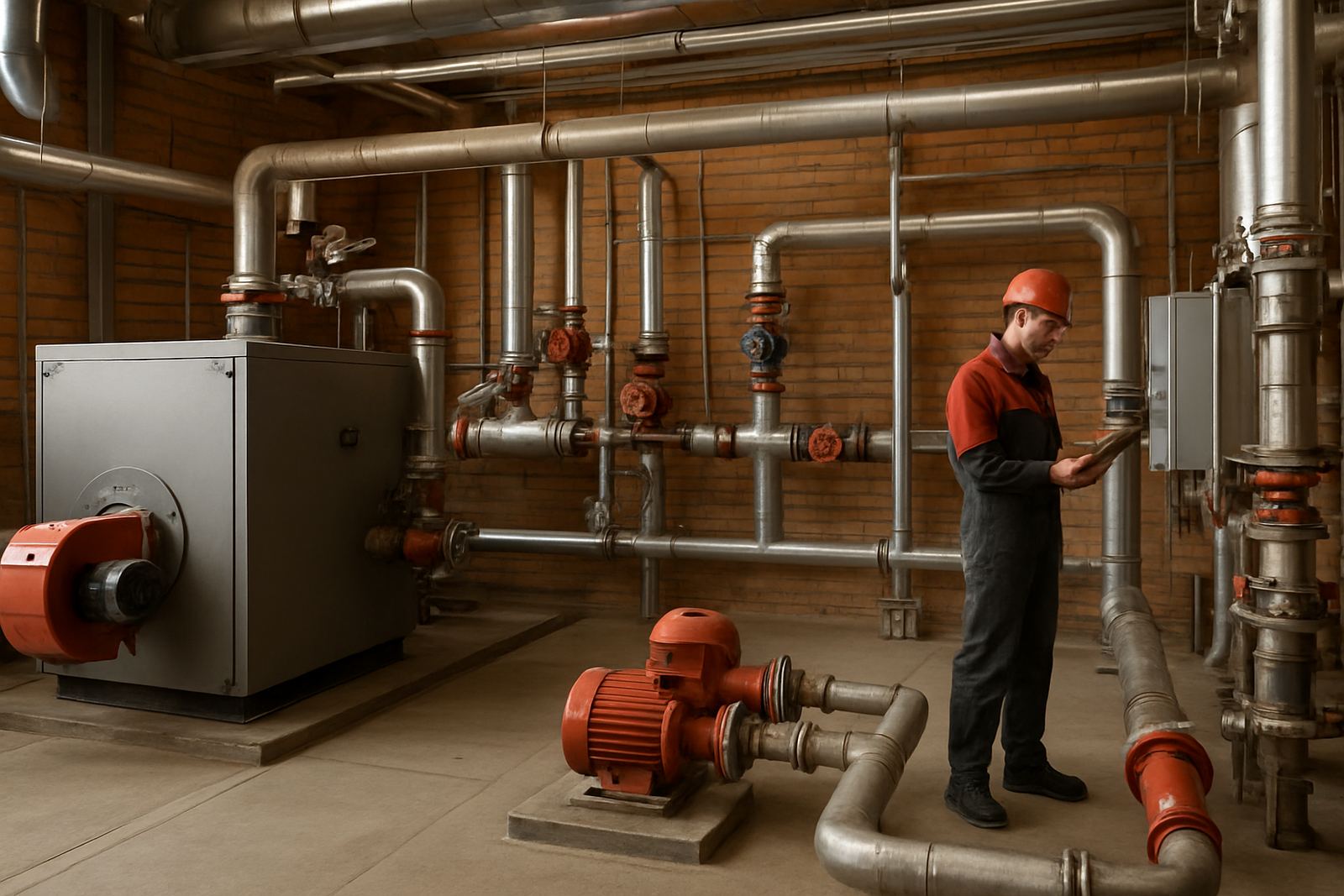
Boiler house ventilation has two jobs. First, it must supply enough combustion air for the burner to burn fuel cleanly. Second, it must remove excess heat from the room so the plant area stays within a workable temperature range. Those are related, but they are not the same thing.
Combustion air shortage affects flame quality and efficiency. Heat removal affects the surrounding equipment and the people working there. On a busy industrial site, you may have a boiler, calorifier, controls panel, water treatment dosing and pipework all sharing the same room. If the room overheats, the weakest link starts tripping. During load-shedding recovery, that extra heat can also make restart conditions worse if the plant is already under pressure.
Good design looks at the full room volume, fresh air inlet size, exhaust path and where warm air exits. It also checks whether nearby extract fans, roller doors or louvre positions are helping or fighting the intended airflow.
What we look for during a ventilation assessment
At Ai-TEC, a practical inspection is better than guesswork. Ventilation should be checked alongside the boiler condition, burner settings and room layout. A plant may pass a quick visual test and still fail under full load on a hot day.
- Intake louvres sized for the actual duty, not the original drawing only
- Clear air paths with no storage of drums, boxes or spares against vents
- Evidence of short-cycling, overheating or flame instability
- Fan noise, vibration or blocked ducting where mechanical extraction is used
- Condition of dampers, insect screens and weather protection on external openings
- Corrosion on terminals, motors and control gear caused by trapped moisture
We also check whether maintenance access has narrowed the room over time. It is common to find a boiler house that was fine when first commissioned, but later filled with extra piping, chemical dosing equipment and stored components. Once the room starts doubling as a storeroom, airflow suffers.
A Gauteng example: hot plant room, repeated trips
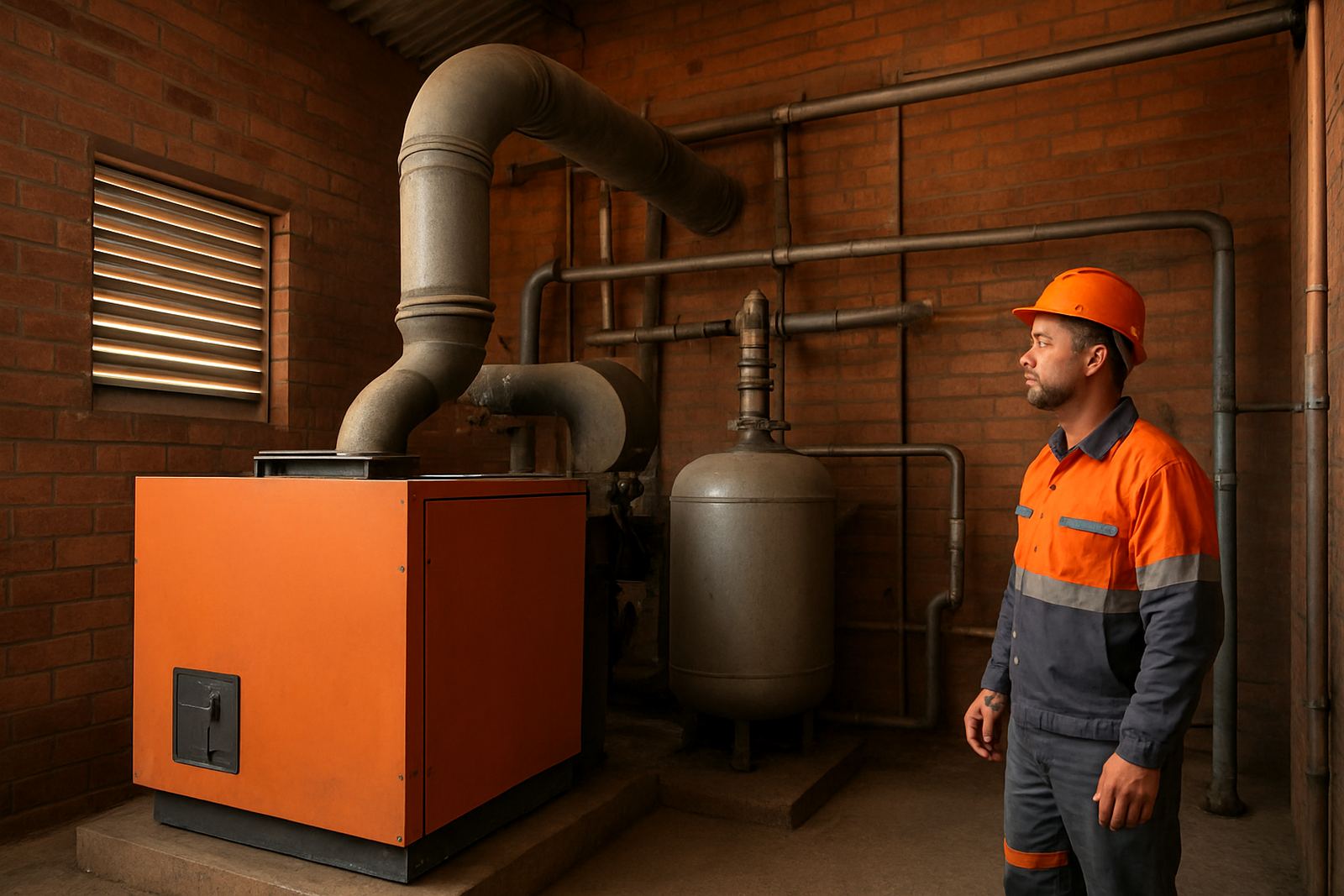
A manufacturing site in the East Rand had a boiler that kept tripping on high temperature on warm afternoons. The burner had been serviced more than once and the controls were tested, yet the fault kept coming back. On inspection, the plant room had one blocked louvre, a partially closed door and newly added pipe cladding stacked near the intake path. The room was simply trapping its own heat.
After clearing the intake, improving the exhaust path and moving stored material out of the airflow line, the boiler settled immediately. Fuel use dropped and the service team stopped attending the same fault every week. The issue was not dramatic, just practical. Once the room could breathe, the equipment did what it was meant to do.
That kind of problem is common in Boksburg, Germiston, Kempton Park and Midrand where plant rooms get expanded over time. A site may also work through power interruptions, so every restart has to be as clean and predictable as possible.
Keeping ventilation working through the year
Ventilation is not a once-off job. Dust, blocked screens, new equipment and changes to building use all affect airflow. For industrial boilers, annual inspections should include the room itself, not only the pressure vessel and burner. If your boiler house also contains calorifiers, inline heaters or an incinerator, the heat load is higher and the room needs even closer attention.
Simple habits go a long way:
- Keep louvres, vents and ducts clear of packing, foil wrap and offcuts
- Check that doors are not held closed with improvised stops
- Make sure extractor fans and dampers are tested during service visits
- Watch for rust, condensation and paint blistering after wet weather
- Review room layout whenever new pipework or electrical panels are added
Good ventilation supports safer operation, better combustion and longer equipment life. It also helps with compliance, because inspectors want to see that the plant has enough fresh air and that heat is being controlled properly. A boiler house should not feel like a furnace by mid-morning.