Start with the job the pump must do
The first question is simple: what must the water do in this plant. A pump for a calorifier loop, a boiler primary circuit, or a hot water circulation ring all work differently. The duty is not just moving water from A to B, it is keeping temperature stable, coping with peak demand and protecting the equipment from stress.
Before any selection is made, gather the basics: flow rate in litres per second or cubic metres per hour, system temperature, pipe sizes, static lift, fittings, and the length of the run. A pump that suits a small office block in Sandton may be completely wrong for a factory in Germiston with long pipe runs, higher return temperatures and shift work.
- Daily hot water demand
- Number of users or process points
- Supply temperature and return temperature
- Pipe length, bends and valves
- Operating hours and standby needs
Flow rate is only useful when the load is known
Flow tells you how much water must move through the system every hour. Too little flow and the water does not carry enough heat, so the boiler or calorifier works harder and the return temperature climbs. Too much flow and you can get noise, erosion, high power use and poor control at the valves.
In practice, the flow figure must match the heat load. A plant that serves showers, kitchens and laundry demand needs different sizing from a process loop that keeps wash water hot all day. If the system is fitted with variable demand, such as office occupancy changes or shift changes, the pump should be selected to work across a range, not only at peak.
As a rule, it helps to think in terms of the normal day, the busy day, and the worst day. That way the plant does not fall over when the morning start-up hits, or when a municipal supply issue means tanks are running lower than usual.
Head pressure decides whether the pump can reach the system
Head is the resistance the pump must overcome. It comes from height, pipe friction, valves, strainers, bends and heat exchangers. Many sites focus on flow only and ignore head, then wonder why the pump runs hot or never delivers the promised performance.
For a heating system, head is often the bigger error in selection than flow. Long horizontal runs in a warehouse, older pipework in a plant room, or badly placed valves can add far more resistance than expected. In coastal areas, corrosion and scaling can make the problem worse over time, so the original calculation should allow for some margin without oversizing the motor.
When the head is right, the pump runs closer to its efficient point. That means less noise, less wear on seals and bearings, and lower electricity use, which matters when loadshedding has already pushed many sites toward backup generation.
- Check total pipe length, not only the straight run
- Count every elbow, valve and non-return valve
- Allow for fouling in strainers and heat exchangers
- Confirm whether the pump works on closed loop or open loop circulation
Why redundancy matters in commercial plant rooms
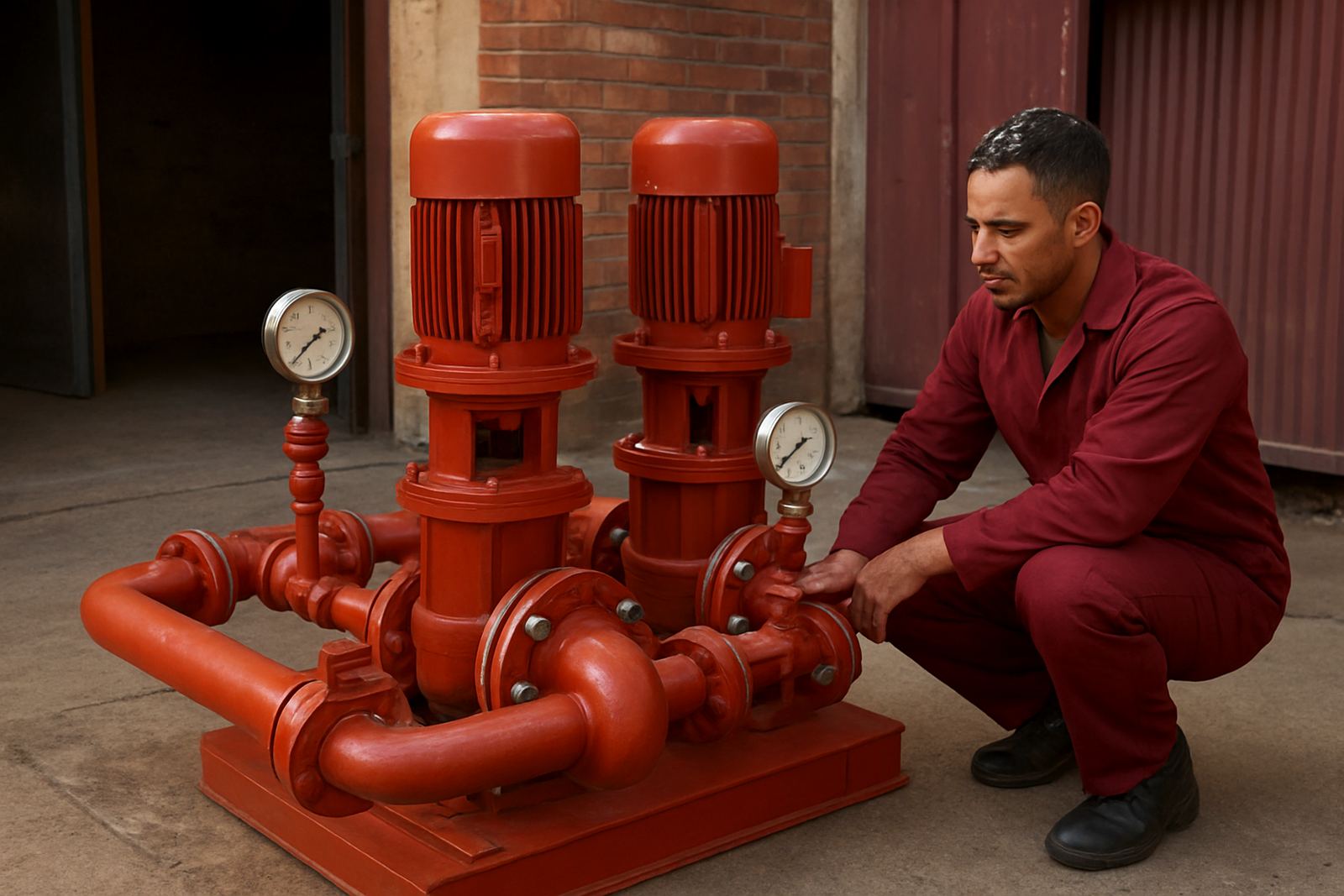
Heating and hot water systems should not stop because one pump fails. In a hotel, hospital, factory wash area or office block, downtime can quickly become a service issue. That is why redundancy matters. The most common arrangement is duty and standby, or two pumps sharing the load with one available as backup.
Redundancy does not have to mean doubling everything. It can mean one pump carries the normal load and the second steps in during maintenance or fault conditions. On larger sites, variable duty sets can stage pumps so the system matches demand without wasting power.
A good selection also considers how easy the pump is to isolate and remove. If the pump sits in a tight plant room with poor access, even a simple seal change becomes a problem. Good access saves hours, and in some buildings it can make the difference between a same-day repair and a shutdown over the weekend.
Controls, balancing and power use affect the final choice
A pump is never selected on its own. It works with the control valves, temperature sensors, expansion system and the pipe balancing. If the controls are poor, the best pump still performs badly. In many older systems, the cure is not a bigger pump but better balancing and proper control of the recirculaton loop.
For energy efficiency, variable speed control often makes sense where demand changes through the day. That can reduce power use and keep return temperatures steadier. On sites with generators, the start current and running load also matter, because an oversized pump may strain a backup supply during loadshedding.
A practical selection should also take maintenance into account. Mechanical seals, bearings and strainers need regular inspection, especially where water quality is not ideal. If the site has hard water, sediment or oxygen ingress, water treatment support should be part of the plan from the start.
A Gauteng example from a mixed-use hot water system
Take a mixed-use building in Midrand with offices, wash rooms and a small process area. The owner originally wanted one large pump because it looked simpler. The problem was that the building had different demand patterns through the day, and the long return line to the plant room created more resistance than expected.
After checking the flow needs, the pipe layout and the standby requirement, the system was better served by a duty and standby set with variable speed control. That gave stable hot water at low occupancy, enough capacity for the morning peak, and cover if one pump needed service. It also made future maintenance easier because the pumps could be isolated without shutting the whole building down.
This kind of job is common across Gauteng, from Boksburg to Pretoria. The details change, but the principle stays the same: match the pump to the actual system, not the assumed one.
What to confirm before you place an order
Before any pump set is ordered, confirm the duty point, the pipework condition, the power supply and the space available in the plant room. If the system feeds a calorifier or boiler circuit, check the operating temperature and the materials used in the wetted parts. If the site is near the coast, or the water quality is poor, ask what protection is needed against corrosion and scaling.
- Correct flow and head calculation
- Duty and standby arrangement
- Electrical supply and starter type
- Access for maintenance and lifting
- Compatibility with existing controls
Good pump selection saves power, protects plant and reduces callouts. It also makes servicing easier when the time comes, which is often when a site is busiest and least able to cope with a failure.