
How a heat pump heats water
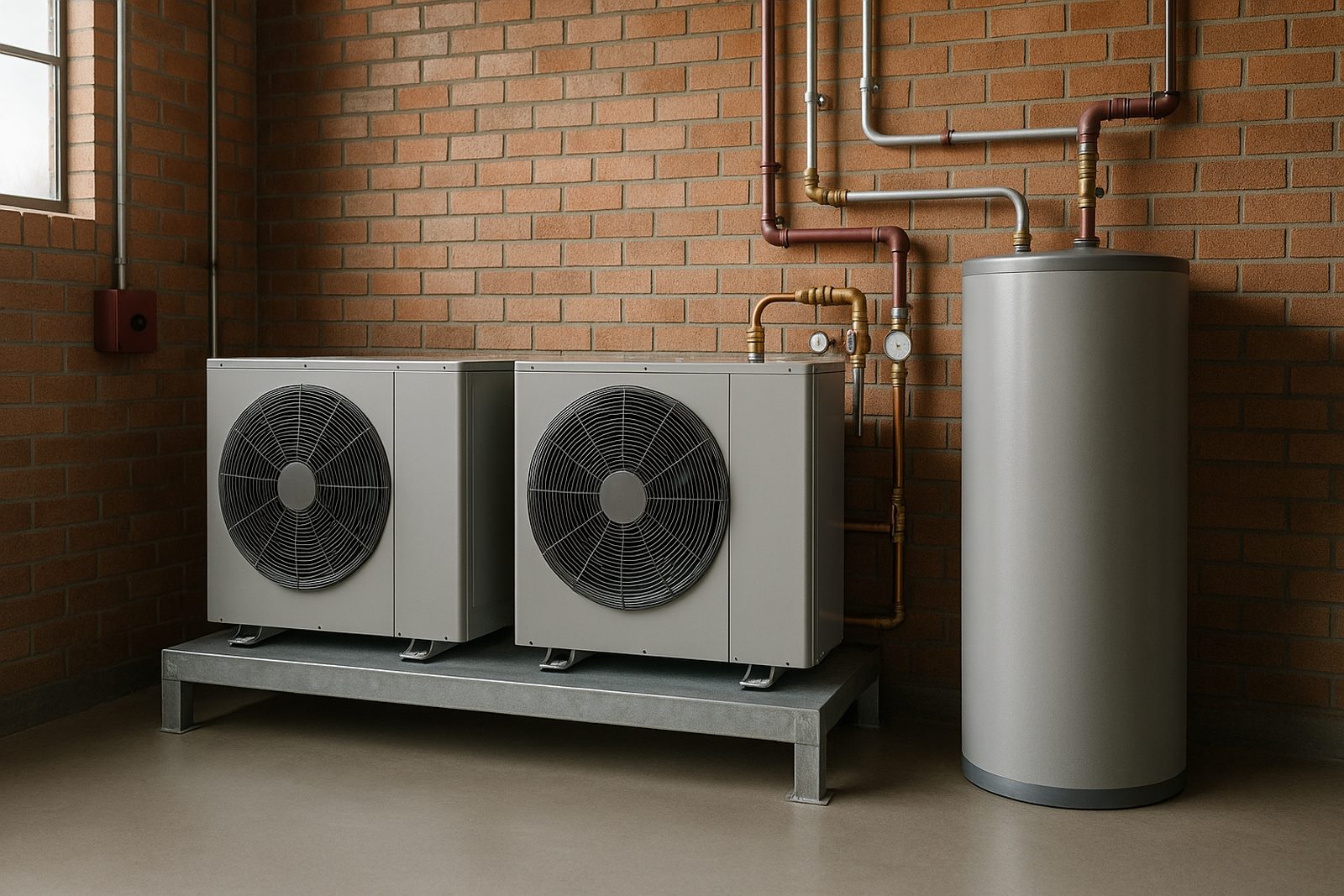
An air-source heat pump does not make heat the way an element or a burner does. It pulls heat out of the outside air with a refrigerant circuit, raises its temperature with a compressor and passes it into the water through a heat exchanger. For every unit of electricity the compressor and fan use, a well-sized commercial unit typically delivers three to four units of heat into the water on a mild Gauteng day.
That ratio is why heat pumps make sense on sites that heat a lot of water with electricity. A hotel, hostel, hospital or laundry running banks of calorifier elements can usually cut the electricity used for water heating by well over half, while keeping the storage vessels and the reticulation it already has.
We supply commercial heat pump water heaters as single units for smaller buildings and as modular banks for larger loads, with the storage, pumps, valves and controls to make them work as one plant.
Sizes and configurations we supply
Commercial units are rated by heat output. Single units in the range we supply run from about 10 kW for a small guest house or clinic up to about 40 kW, and larger sites use two to eight units piped in parallel. A bank of units also gives you redundancy: if one is down for service, the rest keep heating.
- Standard units for hot water at 55 to 60 °C, the usual setting for showers, kitchens and hand basins
- High-temperature units for laundries, food plants and washdown, where water is needed at 65 °C or more
- Packaged heat pump and storage skids for sites without a plant room
- Retrofit kits that add a heat pump to an existing electric or boiler-fed calorifier
Most new installations use R32 or R290 refrigerant units. Where a site needs very hot water and has a steady draw, a CO2 (R744) heat pump can reach higher temperatures, and we will tell you plainly whether the price difference is worth it for your load.
Where heat pumps earn their keep
The best candidates are sites with a large, daily hot water demand that is currently heated by electricity. These are the jobs we see most often:
Heat pumps are not the right answer for every site. Where a plant already has spare steam or boiler capacity running all day, a steam or boiler-fed calorifier may heat water more cheaply. Where hot water use is small and occasional, a simple electric calorifier can cost less over its life. We work through the numbers with you before recommending a change.
Sizing for Highveld winters
A heat pump's output drops as the outside air gets colder. On a June morning in Boksburg or Pretoria, when air temperatures sit close to freezing just as the shower peak hits, a unit may deliver noticeably less heat than its summer rating. We size the bank and the storage for that morning, not for an average day, and we keep the existing elements or boiler in the system as a top-up source.
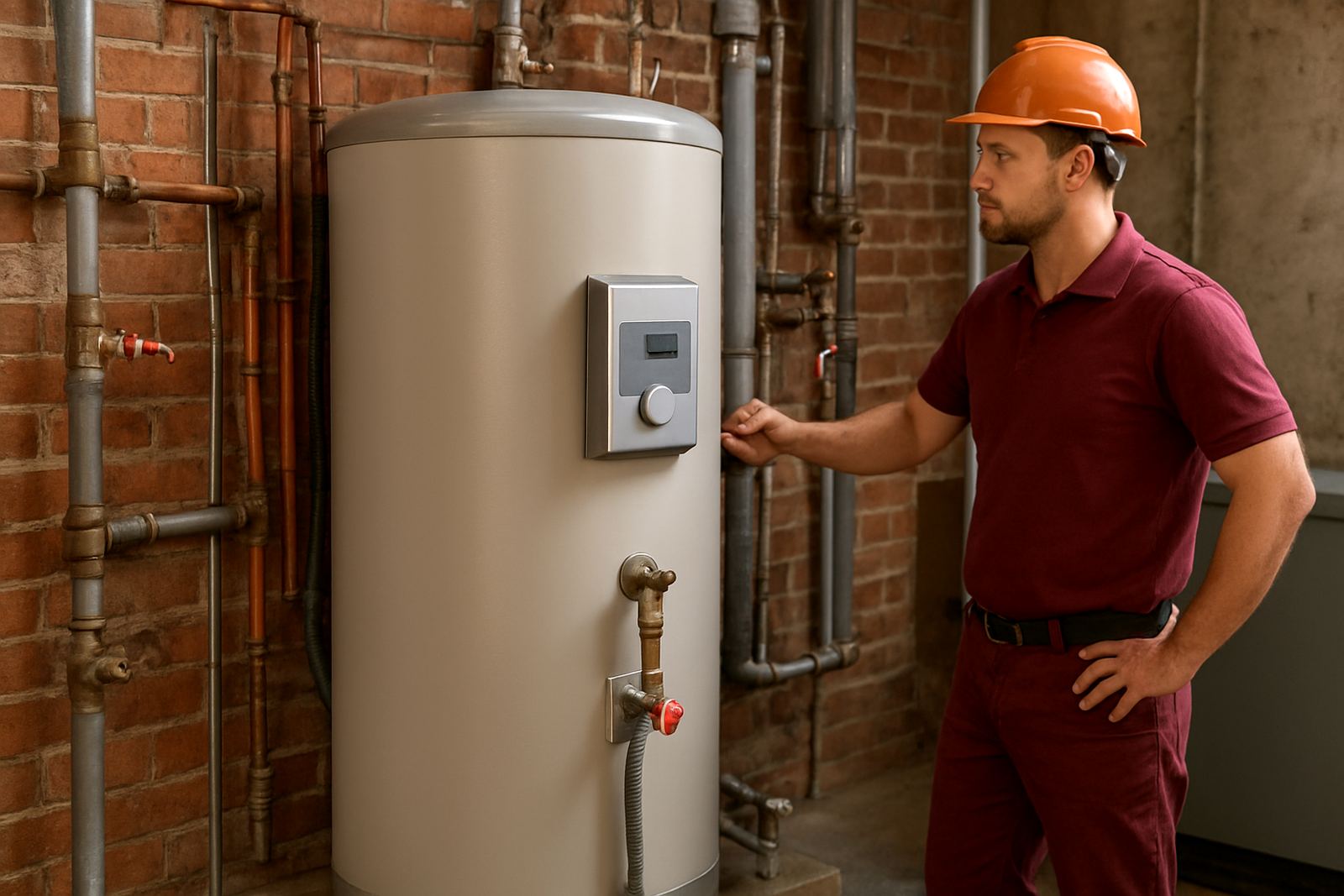
Storage matters as much as heat pump size. Heat pumps work best heating steadily over many hours, so the vessels hold enough hot water for the peak while the units rebuild the store between peaks. On larger sites we often pair a heat pump bank with a buffer vessel and keep the existing calorifiers downstream as the final stage.
Legionella control stays in the design. Stored water is held at 60 °C, and the controls run a regular pasteurisation cycle that lifts the whole store above that, using the elements or boiler where the heat pump alone cannot reach it. Our note on calorifier legionella risk explains why this matters.
Installation, water quality and power cuts
Air-source units need a good flow of outside air, so they usually go on a roof, a plinth beside the plant room or a plant room with large louvres, never a sealed room. They blow out cool air, which can be useful near a hot kitchen or laundry. We check structural loading, noise toward neighbours, drainage for the condensate they produce, and the pipe route to the storage.
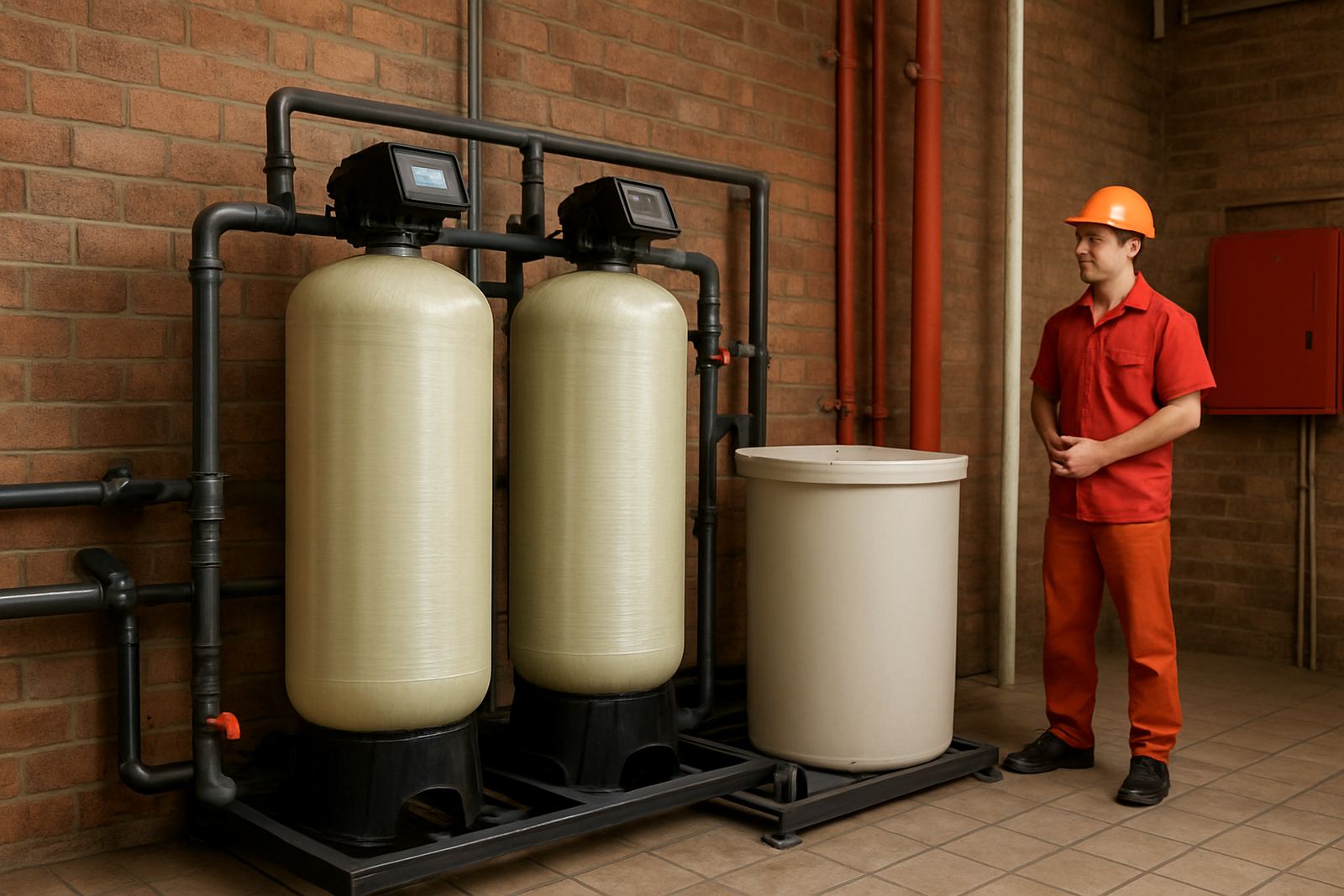
Gauteng's hard water is the main enemy of the heat exchanger inside the unit. On hard-water sites we fit a water softener skid or put a plate heat exchanger between the heat pump circuit and the hot water, so scale forms where it can be cleaned instead of inside the unit.
Heat pumps need power to run, so during power cuts the stored hot water carries the site. Because they draw roughly a third of the power of the elements they replace, they are far easier to run from a generator or backup system. We set the controls so units restart one at a time when power returns.
Servicing and support
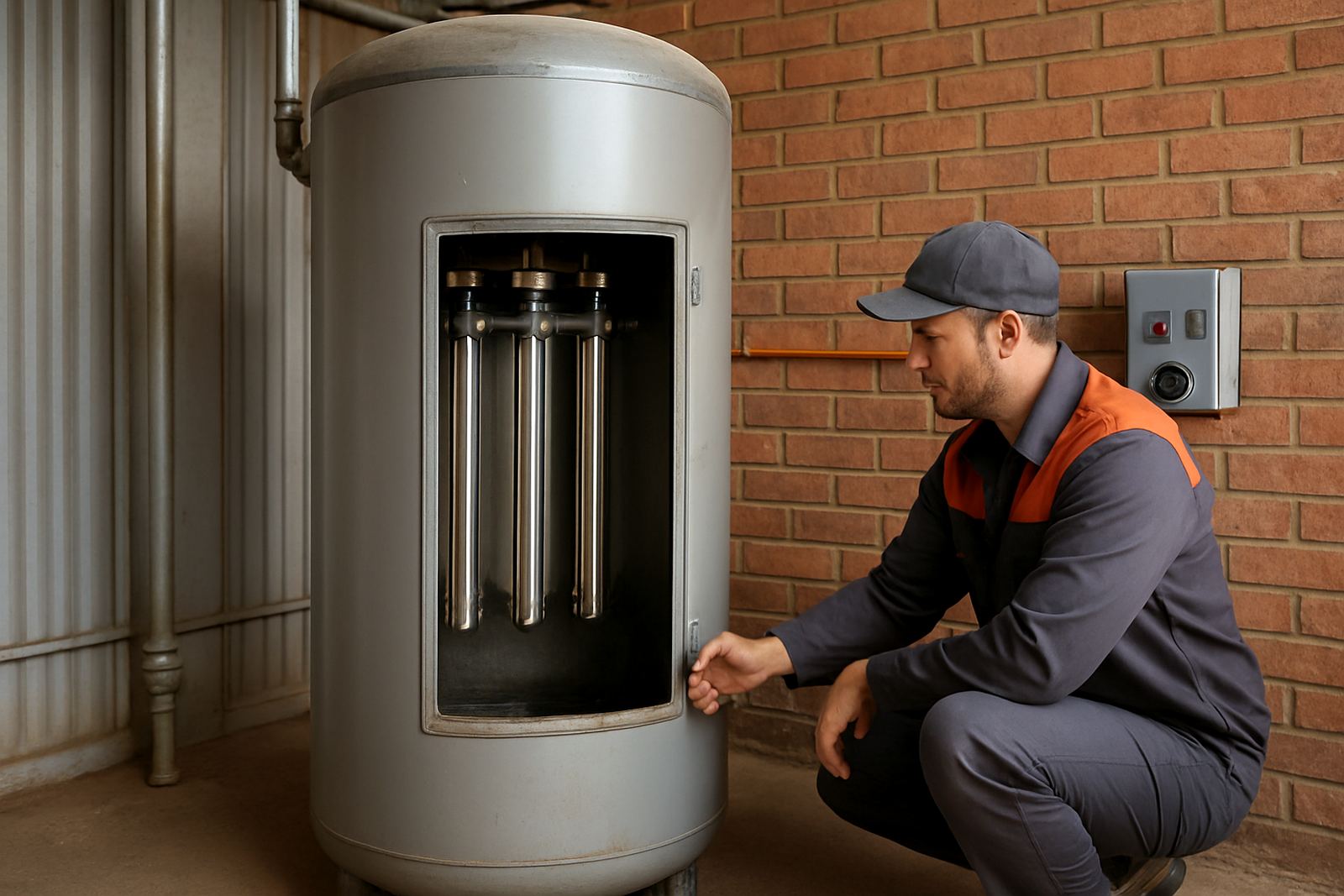
A heat pump needs less attention than a boiler, but it is not fit-and-forget. Fins and filters need cleaning, refrigerant pressures and electrical connections need checking, and the heat exchanger and strainers must stay free of scale. We add heat pumps to the same calorifier maintenance visits that cover the storage vessels and valves, so the whole hot water plant is serviced together.
To quote, we ask for your current hot water use or the number of beds, rooms or showers, the hours of peak use, the storage you already have, the electrical supply at the plant room, a water hardness result if you have one, and photos of the plant room and the space outside. Send them through our contact form and we come back within one working day.
Key facts
| Product type | Commercial air-source heat pump water heater, single unit or modular bank |
|---|---|
| Typical unit output | About 10 kW to 40 kW of heat per unit, with banks of two to eight units |
| Hot water temperature | 55 to 60 °C standard; 65 °C and above on high-temperature units |
| Typical efficiency | Three to four units of heat per unit of electricity on a mild day, lower in cold weather |
| Refrigerants | R32 or R290 on most units; CO2 (R744) where very hot water is needed |
| Service support | Sizing, supply, installation coordination, retrofit to existing calorifiers, servicing and repairs |