What an electric calorifier does in a hot water plant
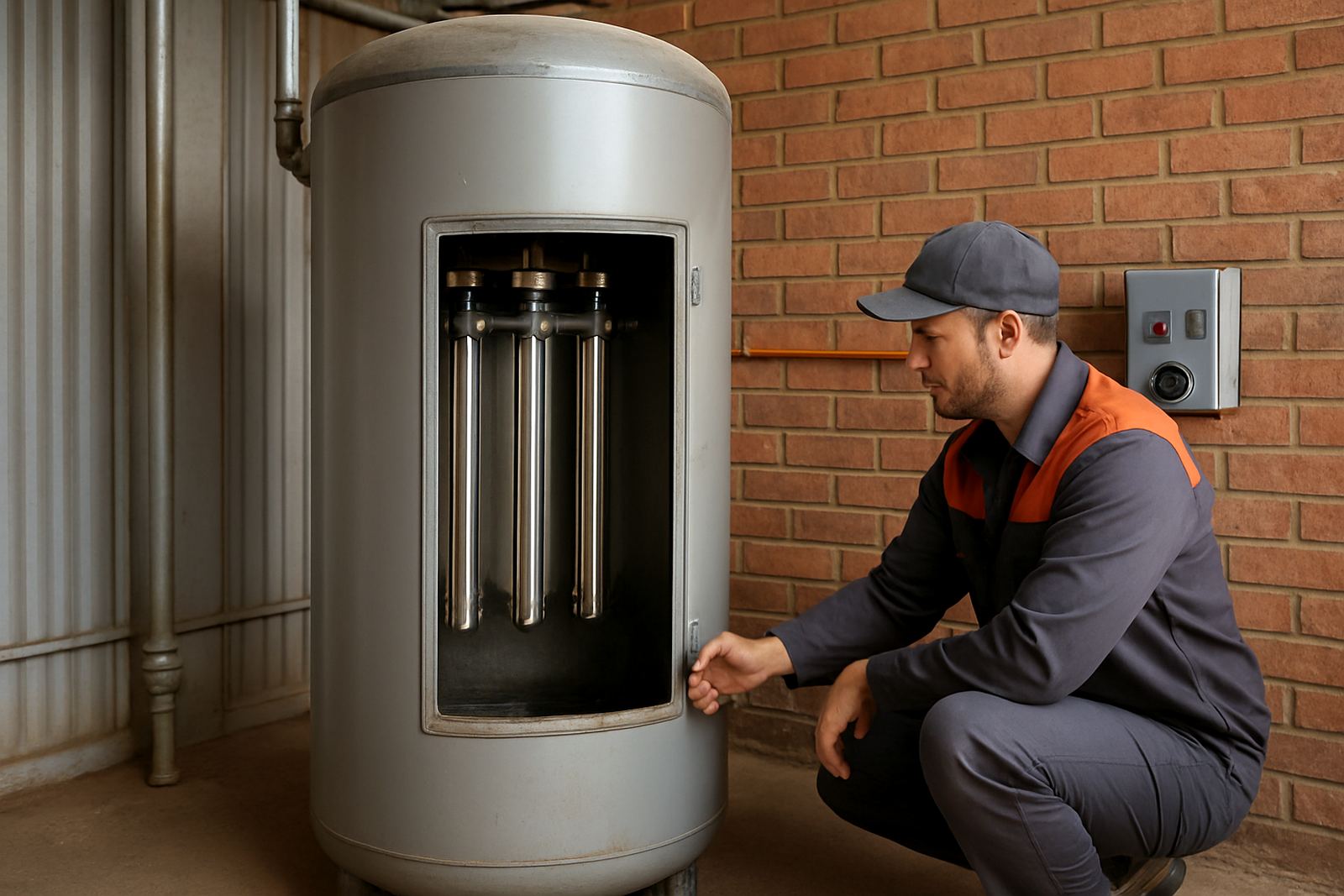
An electric calorifier is a hot water storage vessel fitted with electric heating elements and controls. Cold water enters the cylinder, the elements heat it to the set temperature, and the store holds that water ready for use. For many sites this is the simplest way to keep showers, hand wash points, kitchens and wash bays supplied when there is no steam line or boiler available for heating.
Compared with a direct boiler linked system, an electric calorifier is often easier to place close to the point of use. That cuts pipe runs, reduces heat loss and helps where space is tight. It is a practical choice for sites in Gauteng with mixed occupancy, or coastal sites where humidity can affect plant rooms and you want fewer linked systems to maintain.
We supply and support electric calorifiers for commercial and industrial use from our Jet Park, Boksburg base with service teams across Gauteng and national coverage when required.
Common sizes and build options
Electric calorifiers are available in a range of capacities to suit small service blocks and larger facilities. Typical capacities include 100 litres, 200 litres, 300 litres, 500 litres, 750 litres and 1 000 litres, with larger units available for higher demand. Vessel sizes are selected around peak draw-off, recovery time and the hours of use on site.
Build options matter as much as size. On some sites a floor standing unit with a service panel is best. On others a compact vertical vessel fits into a plant room with limited floor space. Insulation thickness, element loading, thermostat range, pressure rating and anode access all need to match the duty. Where water quality is hard or scale forming, extra attention should be given to the element pocket, flange design and maintenance access.
- Storage capacities from small point of use units to larger central plant vessels
- Single phase and three phase electrical options, subject to load and size
- Thermostatic control with safety cut out
- Insulated vessels to reduce standing heat loss
- Service access for elements, thermostats and sacrificial protection components
Where electric calorifiers suit best
These units suit sites that need dependable hot water without using boiler supplied primary heat. That includes office parks, warehouses, schools, clinics, retirement facilities, gyms, car washes, food preparation areas and process buildings with washdown points. They are also useful as a backup hot water source when a boiler plant is being refurbished or when a central heat system is taken offline for maintenence.
In practice, electric calorifiers work well where hot water demand is steady rather than very spiky. If your site has a few high use periods, the vessel can be sized to store enough hot water for those times and then recover during quieter periods. For sites in Johannesburg, Pretoria, Kempton Park and Sandton where space and access are often limited, a well sized electric calorifier can be far simpler than building in extra pipework from a central boiler plant.
- Sites without a boiler room or without spare boiler capacity
- Facilities needing local hot water close to bathrooms or kitchens
- Buildings wanting to separate domestic hot water from process heating
- Operations that need continued hot water during boiler shutdowns
Electrical supply, installation and site checks
Before installation, the electrical supply must be checked against the element load and the starting arrangement. Smaller units may run on single phase supply, while larger calorifiers generally need three phase power and suitable isolation. The distribution board, cable size, protection devices and earthing must all be checked by a competent electrician. On busy sites with load-shedding, it is also worth planning how the hot water system will behave when power is interrupted and restored.
We look at the plant room layout, access for maintenance, floor loading, drainage, pressure control and expansion provisions. In many municipal areas, discharge from temperature and pressure relief devices must be routed correctly and not left to spill onto floors or public areas. If the site is near the coast, corrosion protection and enclosure conditions become even more important because salt air and humidity can shorten service life.
- Confirm available electrical capacity before ordering
- Check water pressure, incoming pipe sizes and expansion requirements
- Allow space for maintenance access around elements and controls
- Fit isolation valves, non return protection and safe discharge routes
Keeping the calorifier in good working order
Electric calorifiers need regular care if you want reliable hot water and lower running costs. Scale build-up on elements slows heat transfer and pushes up electricity use. Controls can drift, relief valves can stick and sacrificial anodes can wear down in aggressive water conditions. A planned servicing schedule keeps the system honest and helps prevent unplanned shutdowns.
Our service teams handle annual inspections, element checks, thermostat testing, valve checks, tank inspection and water treatment support where required. Where there is heavy mineral content in the water, we may recommend closer inspection intervals or practical changes to reduce scale. For sites in Gauteng, we often see poor performance caused by hard water, incorrect set temperatures or undersized storage, not only by component failure.
If the calorifier is part of a bigger plant room, we can also coordinate with boiler servicing, annual inspections and plant refurbishment so the hot water side and the heating side are managed together.
What to confirm before you place an order
Before ordering, it helps to define the duty properly. We ask for peak hot water demand, outlet temperature, recovery time, available electrical supply, water pressure, plant room dimensions and whether the unit will be used as primary hot water or as backup. We also want to know if the site is in a corrosive environment, a dusty industrial area or a building with strict access hours.
Useful information includes whether the unit must fit through a standard doorway, whether floor mounting is preferred, and if the site needs extra service access for future element replacement. If you are replacing an existing vessel, photos of the current installation and the old nameplate details can save time. It also helps to know if you are tying into existing hot and cold water reticulation or starting with a new plant room layout.
- Required litres per hour or litres per day
- Preferred temperature set point and recovery time
- Single phase or three phase supply available
- Space available for the vessel and maintenance access
- Water quality issues, scale history or corrosion concerns
Local support for supply, repair and replacement
Ai-TEC has supported commercial heating and hot water equipment since 2009 from our Boksburg base in Jet Park. Our team includes project, service and fabrication support under one roof, so we can assist with supply, installation coordination, repairs and replacement work on existing plant. We operate across Boksburg, Kempton Park, Germiston, Pretoria, Midrand and Sandton, and we also send teams nationally where the job requires it.
Whether you need a new electric calorifier, a like for like replacement, or a fault find on an existing unit, we can help you match the vessel to the site and keep the hot water on. For direct enquiries, contact engineering@ai-tec.co.za.
Key facts
| Product type | Electric calorifier for commercial and industrial hot water storage |
|---|---|
| Typical capacities | 100 litres to 1 000 litres, with larger units available on request |
| Power supply | Single phase or three phase, subject to unit size and load |
| Water temperature range | Set according to site duty and control specification |
| Construction | Insulated storage vessel with electric elements, thermostat and safety cut out |
| Service support | Supply, installation coordination, servicing, repairs and replacement |