What a hot water skid is and why plants use it
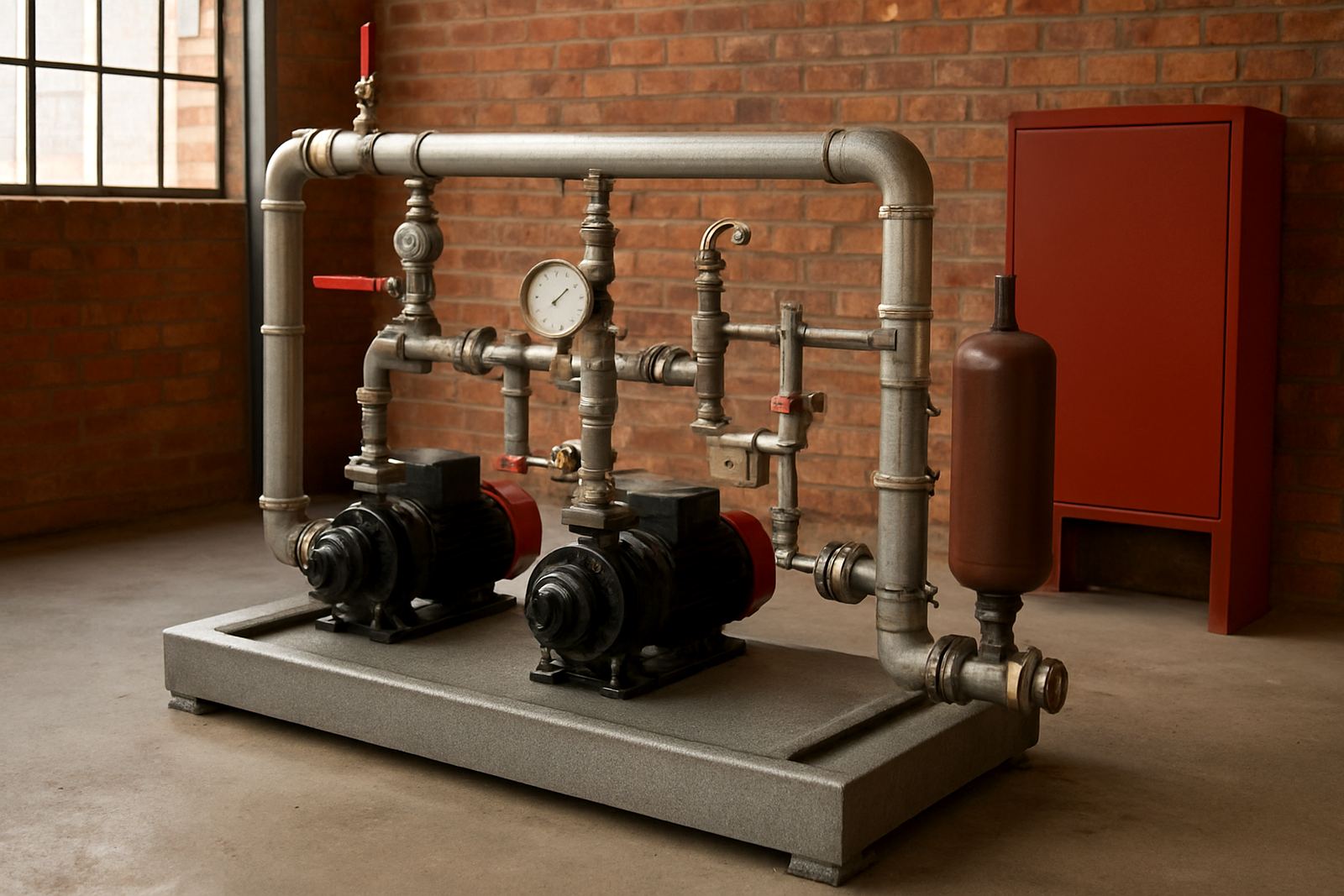
A hot water skid is a complete hot water package mounted on a steel frame and piped up in one unit. Instead of building every part on site, the main equipment, valves, pumps, controls and safety fittings are grouped together and factory assembled first. That makes the plant room easier to plan, and it usually shortens the time your team spends waiting on multiple trades.
For busy sites in Gauteng, coastal humidity areas and places where load-shedding can upset plant schedules, a skid helps keep the hot water side organised. It also gives maintenance teams clearer access to the items that wear out first, such as circulation pumps, temperature controls, strainers and non return valves.
- Mounted on a skid frame for easier lifting and positioning
- Built for neat pipe routing and faster site connection
- Can be set up with gas, electric or boiler-fed heat input
- Suitable for domestic hot water or process hot water duties
Sizes, layouts and control options
Hot water skids can be built small enough for a compact plant room or larger for continuous demand on a production site. The exact size depends on the hot water load, required temperature rise and the available utilities. Some sites need a single duty pump and a simple control panel, while others need duty and standby pumps, mixing valves, isolation valves and differential pressure control.
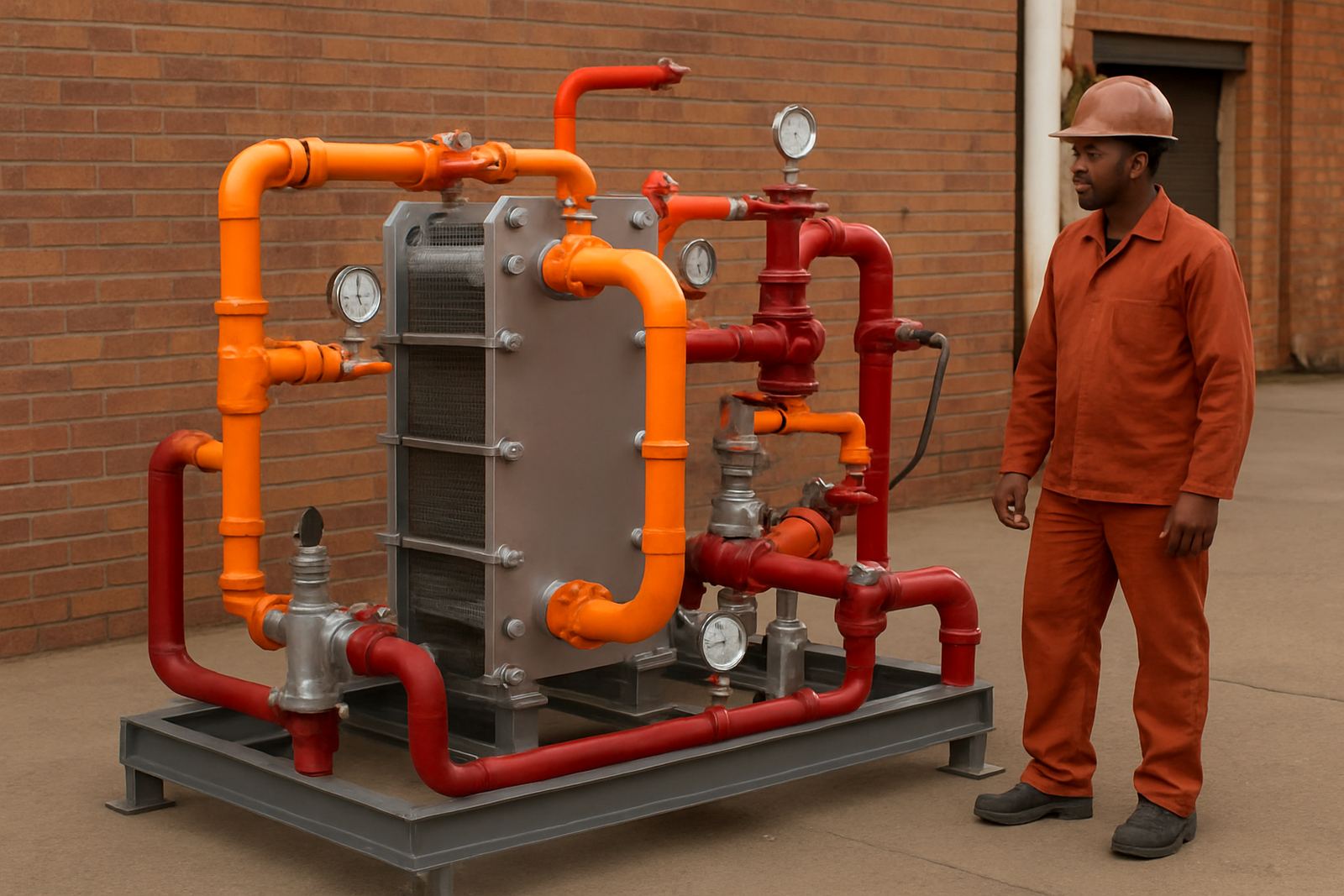
Common options include plate heat exchangers, buffer vessels, calorifier connections, mixing valves and recirculation sets. Where water quality is poor, a skid can also be arranged to make future cleaning easier. If your site has limited access through a narrow door or up a stairs, the frame can be split into sections for handling and bolted together on site.
- Compact skids for staff ablutions and small kitchens
- Medium units for hotels, schools, laundries and workshops
- Larger process skids for wash bays, food areas and plant use
- Options for duty standby pumping and temperature control
Where a hot water skid works best
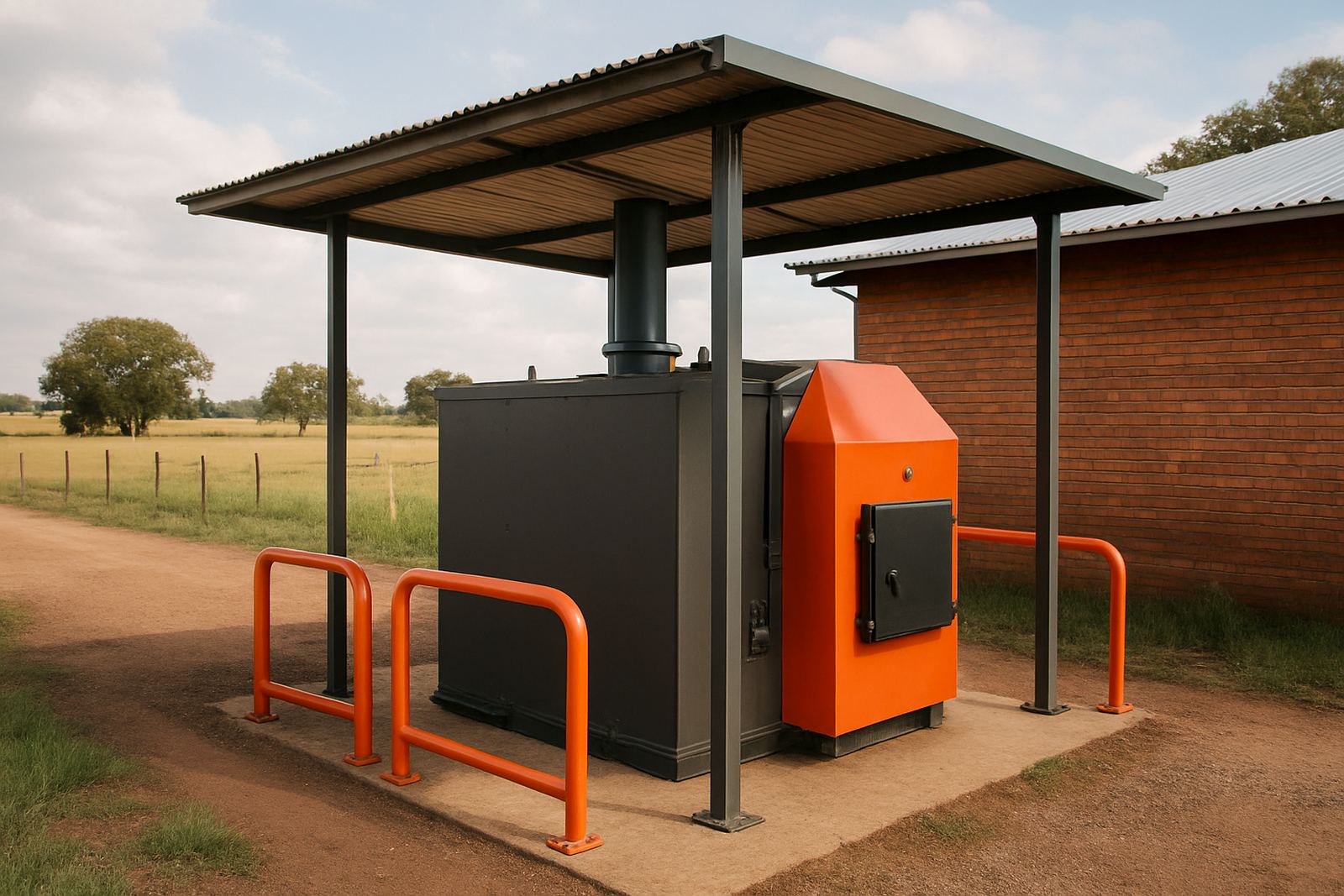
These units suit sites that need reliable hot water but do not want a messy plant room build. They are often used in factories, abattoirs, warehouses, care facilities, guest houses, vehicle workshops, schools and housing developments. They are also practical where the plant room has to stay compact because of municipal access rules or existing building constraints.
Because the skid is prefabricated, it is easier to plan around ceiling height, floor drains, wall clearances and service access. That matters when the plant sits in a basement, a back room or a rooftop area where maintenance staff must work safely without moving half the system just to reach one valve.
- Factories with shift-based hot water demand
- Lodges and guest facilities with variable occupancy
- Wash bays, kitchens and laundry rooms
- Sites needing cleaner service access and shorter shutdowns
Installation, power and gas requirements
Installation starts with checking the site footprint, pipe entry points, drainage and access for lifting. The skid needs a level base, enough clearance for maintenance and a plan for how the incoming cold water, hot water return, gas or electrical supply will connect. If the unit is gas fired, the gas train and flue route must suit the room layout and local safety requirements. If it is electric, the supply cable, breaker size and isolator must match the load.
On many South African sites, the practical issues are not the skid itself but the services around it. Voltage dips, generator changeovers and poor water pressure can affect performance if they are not allowed for. We usually check the available electrical capacity, the pressure rating of the pipework, expansion needs and whether the site has enough fresh air for combustion equipment. If a client is in a coastal area, corrosion protection and clean cable routing matter more than people expect.
- Level concrete base or structural support frame
- Correct electrical supply and lockable isolator
- Gas line sizing and ventilation where gas is used
- Drain point, safe access and maintenance clearance
Care, servicing and common wear points
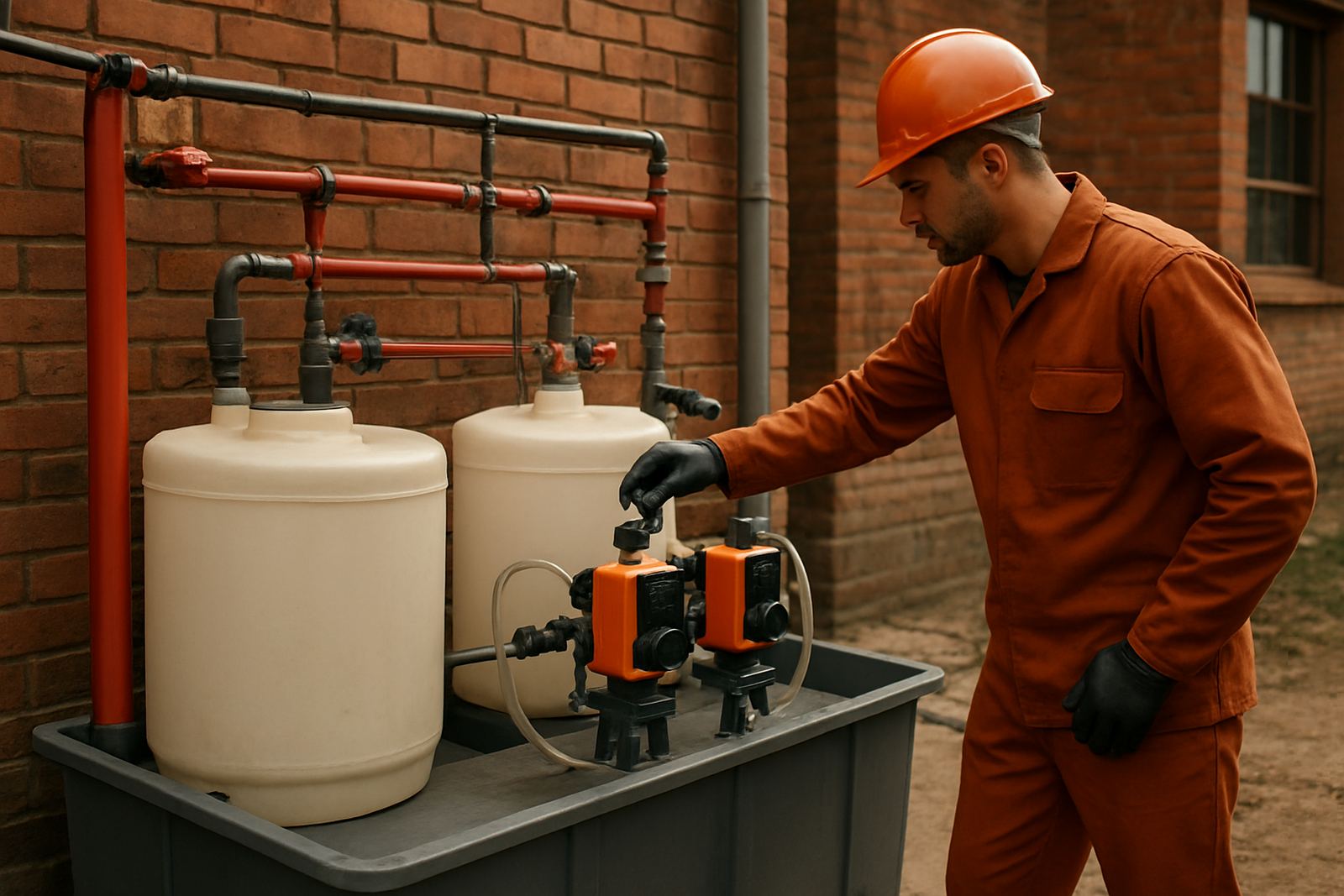
A hot water skid lasts longer when it is checked regularly. Scale build-up, dirt in strainers, tired pump seals and drifting temperature settings can all cause poor performance. If the plant works in hard water areas, the heat exchanger and valves should be checked more often. In busy sites, a service visit can also pick up small leaks before they turn into a shutdown.
Routine care normally includes checking pump operation, cleaning strainers, testing safety controls, inspecting valves and verifying the delivery temperature. If the skid is linked to a boiler or calorifier, the broader plant should be looked at as one system rather than as separate pieces. That approach helps prevent repeated callouts for the same fault.
- Inspect pumps, seals and bearings for noise or vibration
- Check strainers and flush if pressure drop increases
- Test thermostats, sensors and high limit safety devices
- Look for leaks at joints, valves and flex connections
What to check before you order one
Before ordering, it helps to know exactly what the site needs instead of guessing from the old plant. Start with the required litres per hour, target temperature and any peak demand times. Then look at the fuel or power source, the available space and whether the unit must work with an existing calorifier or boiler. If your site runs after hours or through load-shedding, you should also plan for backup supply and controls that recover cleanly after a power cut.
It is also worth checking water quality, pipe sizes, maintenance access and whether spare parts can be reached without removing other equipment. A tidy skid should not hide critical items behind fixed panels. We build and support these units from Jet Park in Boksburg, with service teams in Gauteng and national callout cover when required. The aim is simple: a hot water system that fits the site and can still be serviced next year without drama.
- Duty flow rate and peak demand period
- Required outlet temperature and return temperature
- Available electrical, gas or boiler supply
- Plant room size, access route and maintenance clearance
- Water quality, pressure and filtration needs
Key facts
| Skid frame | Heavy-duty steel base frame with lifting points |
|---|---|
| Heat source options | Boiler-fed, gas fired or electric heated arrangements |
| Typical duty range | Small domestic sets through to larger process duties |
| Control package | Thermostatic control, safety cut-out and pump control |
| Installation footprint | Built to suit the plant room and access route |
| Service access | Isolation valves, strainers and components arranged for maintenance |