What changes first: space, access and plant layout
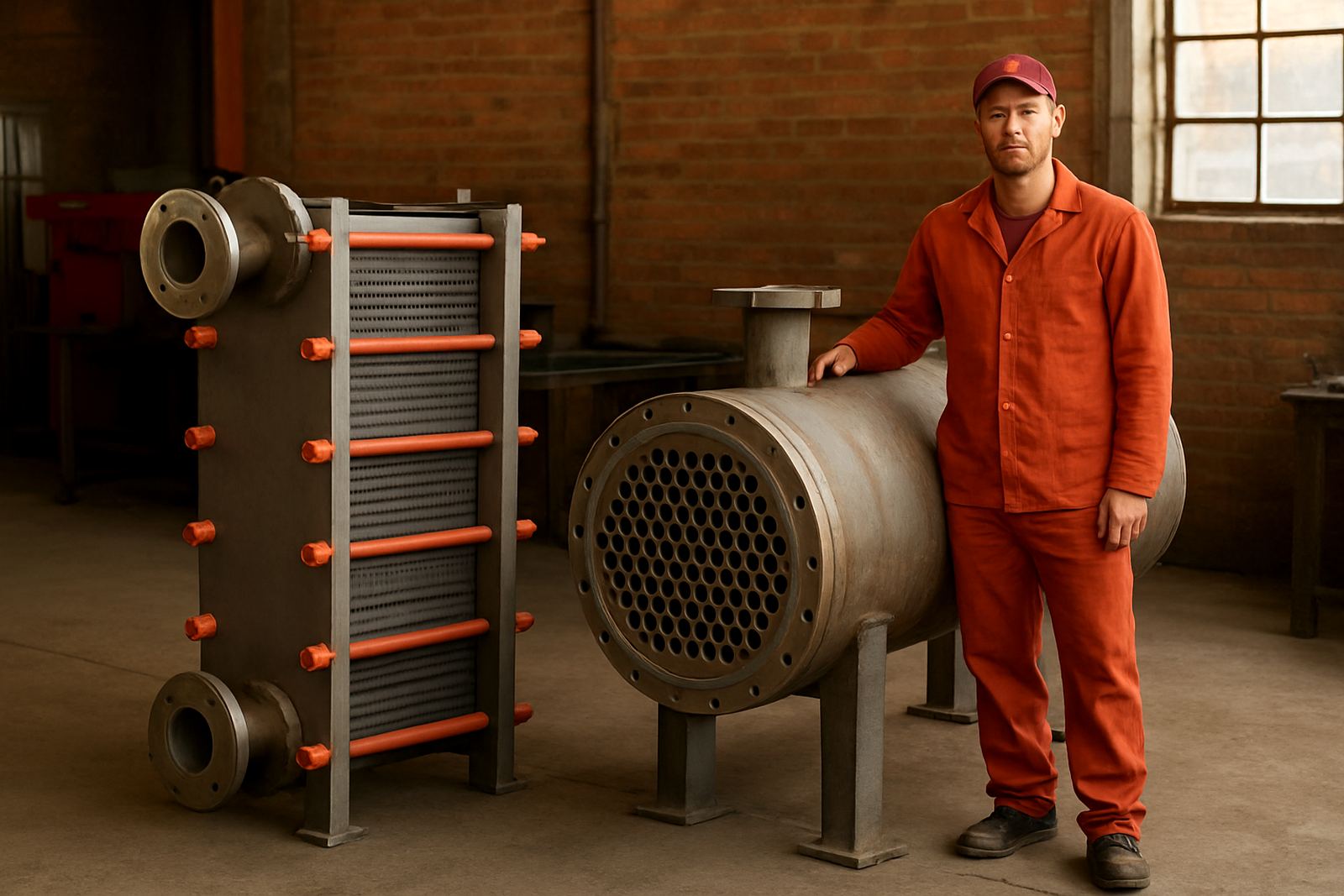
The quickest difference to see is footprint. Plate exchangers are compact and usually easier to fit into tight boiler rooms, skid packages or retrofit plant where every metre matters. Shell and tube units take more space, but they can suit heavier duty systems and are often easier to isolate when the pipework around them is already built for a larger industrial layout.
In Gauteng, that matters more than people think. A factory in Boksburg or Germiston might need to upgrade heat transfer without moving walls, while a site in Pretoria may have room for a larger unit but wants easier access for cleaning. If the plant sits in a noisy service yard or a humid area near the coast on delivery routes, the casing, supports and insulation need to be chosen with maintenance access in mind.
- Plate exchangers suit compact plant rooms and retrofit work.
- Shell exchangers suit bigger duty cycles and more open layouts.
- Allow enough clearance for lifting, gasket checks and inspection.
Heat transfer and pressure: where each unit earns its keep
Plate exchangers use thin plates to move heat quickly. That gives excellent efficiency and very fast response when the load changes, which is useful for domestic hot water, process loops and systems that see peaks during the day and lighter demand at night. Shell and tube exchangers are built around tubes inside a shell, so they generally handle higher pressures, harsher duties and dirtier services with a bit more tolerance.
In practice, plate units are often chosen when operators want closer temperature control and lower approach temperatures. Shell units are often chosen when the fluid side may carry solids, scale or inconsistent water quality. If a site is still battling poor water treatment, a shell unit may survive longer between cleanouts, though it is not a licence to ignore the chemistry. The correct answer is always tied to the water, flow rate and duty, not just the purchase price.
- Plate units usually give better heat transfer per square metre.
- Shell units often tolerate tougher conditions and higher pressures.
- Water quality can decide more than the brochure does.
Maintenance reality: cleaning time, gaskets and downtime
Maintenance is where many decisions are made after the fact, which is the wrong way round. Plate exchangers usually need plate pack cleaning, gasket inspection and torque checks on the frame. When fouling is light and the plant is designed properly, this is manageable. But if the water is scaling, or if the system carries debris from old pipework, the plates can blind off and performance drops quickly. Then the maintenace team is forced into more frequent shutdowns.
Shell and tube units are normally slower to service, but their cleaning process can be more straightforward in some plants. Tube bundles can be brushed or chemically cleaned depending on the deposit type, and the unit may be more forgiving when the system is not perfect. For industrial sites that cannot stop production for long, the service plan should factor in access, lifting gear and how fast the exchanger can be opened, inspected and returned to line.
- Plate exchangers are faster to inspect, but can need more frequent cleaning in dirty systems.
- Shell exchangers may take longer to service, yet suit tougher operating conditions.
- Downtime planning should include isolation valves, drain points and safe lifting access.
Where each exchanger fits best on South African sites
There is no single winner. Plate exchangers often work best on packaged hot water systems, food processing lines, building services and applications where space is limited and temperature control matters. Shell and tube exchangers are common on heavier industrial circuits, steam related duties, chemical processes and places where the fluid quality is not ideal.
For example, a Gauteng food plant serving process hot water from a boiler room in Jet Park may choose a plate unit because the demand changes through the shift and the available floor space is tight. A refinery-style site or a larger production plant with uneven water quality may lean toward a shell unit because the duty is less gentle and the maintenance windows are wider. If the system also faces load-shedding, the exchanger choice should work with the backup heat source and the restart sequence after power is restored.
- Plate exchangers suit compact, controlled heating duties.
- Shell exchangers suit heavier industrial and less predictable duties.
- Always match the exchanger to the site water treatment and shutdown pattern.
How to spot the wrong exchanger before it becomes a fault
The warning signs are usually easy to see if the plant team is watching them. Slow heat-up times, unstable outlet temperature, rising pressure drop, air locks, leaking gaskets, noisy operation and repeated cleaning are all signs the unit may be undersized, oversized or simply the wrong type for the job. A plate exchanger that keeps blocking is often telling you the water is dirty or the filtration is weak. A shell exchanger that never reaches target output may be too large, too small or fouled on the wrong side.
Do not judge the unit only by the initial capital cost. Look at the whole life of the equipment. That includes water treatment, chemical cleaning, gasket replacement, pressure testing, valve isolation and the manpower needed to strip and rebuild it. On a busy site in Midrand or Sandton, one extra hour of downtime can cost more than the difference between the two exchanger types.
Practical selection tips for engineers and plant managers
If you are replacing an exchanger, start with the real operating data, not assumptions. Measure flow, inlet and outlet temperatures, pressure limits, water quality, fouling history and the time available for planned shutdowns. Then look at the room around the unit. Can a technician reach every bolt? Is there lifting space above the frame? Is there enough clearance to pull a tube bundle or remove a plate pack safely? These are the details that decide whether a good design stays a good design.
For many Gauteng sites, the best answer is to keep the heat transfer equipment simple, serviceable and suited to the water on site. A well sized plate exchanger in a clean loop can give excellent performance. A shell and tube exchanger can be the better long term choice when the plant is rougher and the service intervals need to be longer. The right call is the one that matches production, maintenace planning and the reality on the floor.
- Use actual duty data before choosing a replacement unit.
- Plan for cleaning access as well as thermal performance.
- Match the exchanger to the site water quality and shutdown windows.
Local example: a plant changeover in Boksburg
A Boksburg plant recently faced repeated hot water complaints from a process line feeding washdown points and a small cleaning circuit. The original plate exchanger was undersized for the new demand after the line was expanded. It still produced heat, but pressure drop rose and the unit needed cleaning far too often because the incoming water was carrying fine scale and old pipe debris. After the duty was checked and the pipework reviewed, the team moved to a different exchanger arrangement with better access for inspection and a cleaner water loop.
The result was not just better temperature control. Service time dropped, the operators had fewer interruptions and the maintenance team could plan cleaning around the production calendar instead of reacting to faults. That is the point. Plate and shell exchangers are both useful, but only when they are matched to the plant that actually runs on site, not the one on paper.