How a steam calorifier works on site
A steam calorifier uses steam from an existing boiler plant to heat water through a coil or heat exchange bundle inside a pressure vessel. Cold water enters the unit, steam gives up heat to the tube bundle, and hot water leaves ready for washdown, ablutions, process cleaning or general plant use. Because the heat source is steam, recovery is usually quick and the hot water supply is easier to maintain during busy shifts.
These units suit sites that already run steam for process heating or washing. They are common in food plants, hospitals, abattoirs, laundries, mines, hotels and manufacturing yards where hot water demand changes through the day. In Gauteng we often see them tied into central boiler rooms in Boksburg, Kempton Park and Germiston, with service coverage also reaching Pretoria, Midrand and Sandton.
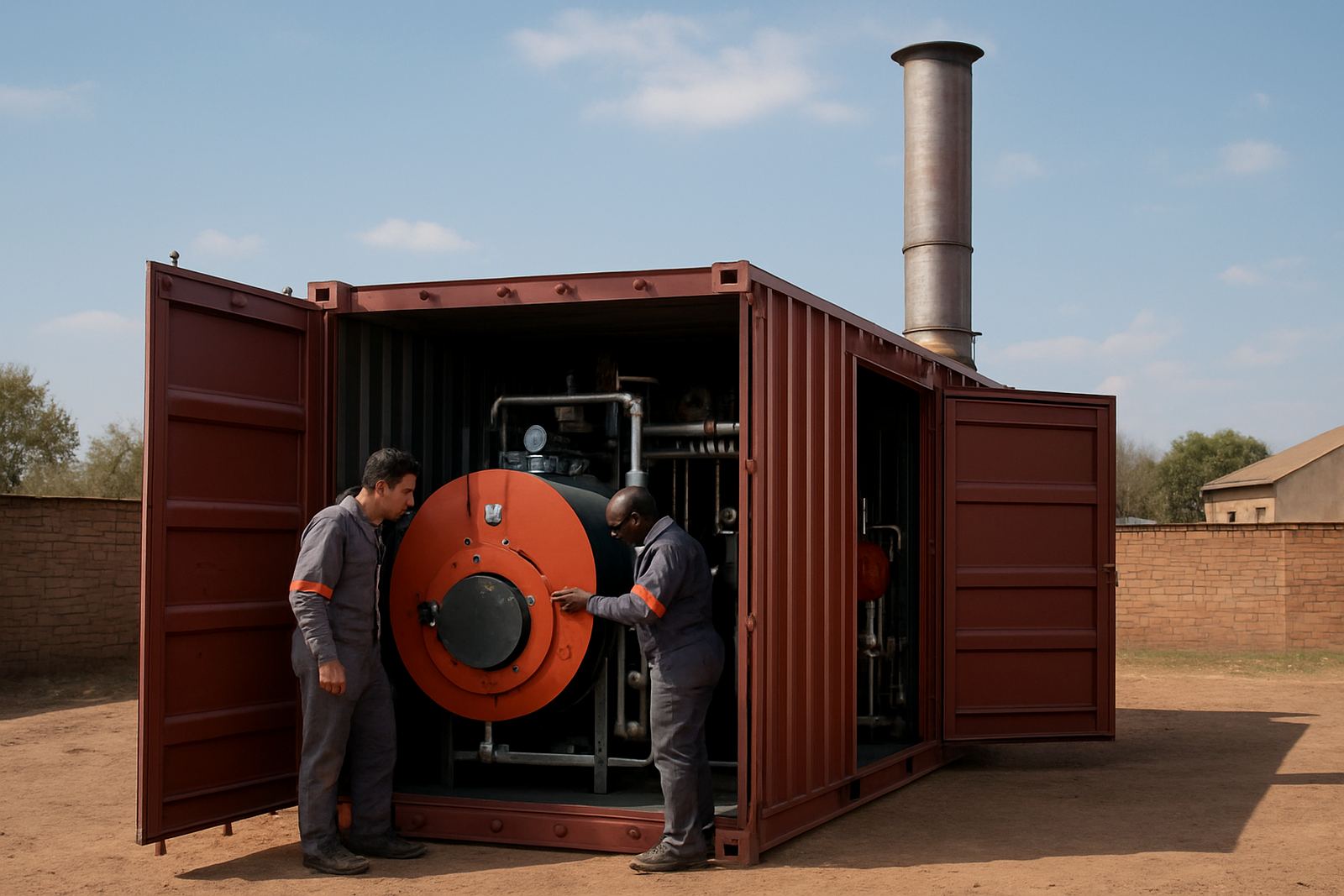
Ai-TEC works with the full setup, not only the vessel. That means the steam connection, condensate return, controls, valves, safety gear and water side all need to be checked together so the unit can do its job properly.
Sizes, storage volumes and build options
Steam calorifiers are not one-size-fits-all. The right unit depends on peak draw-off, incoming cold water temperature, steam pressure and how long the plant needs to hold hot water after hours. Smaller installations may only need a compact floor-standing unit, while larger operations may need higher storage capacity or duty and standby arrangements for better recovery.
- Storage capacities typically range from 300 litres to 10 000 litres, with larger packaged systems available for plantrooms that serve several buildings.
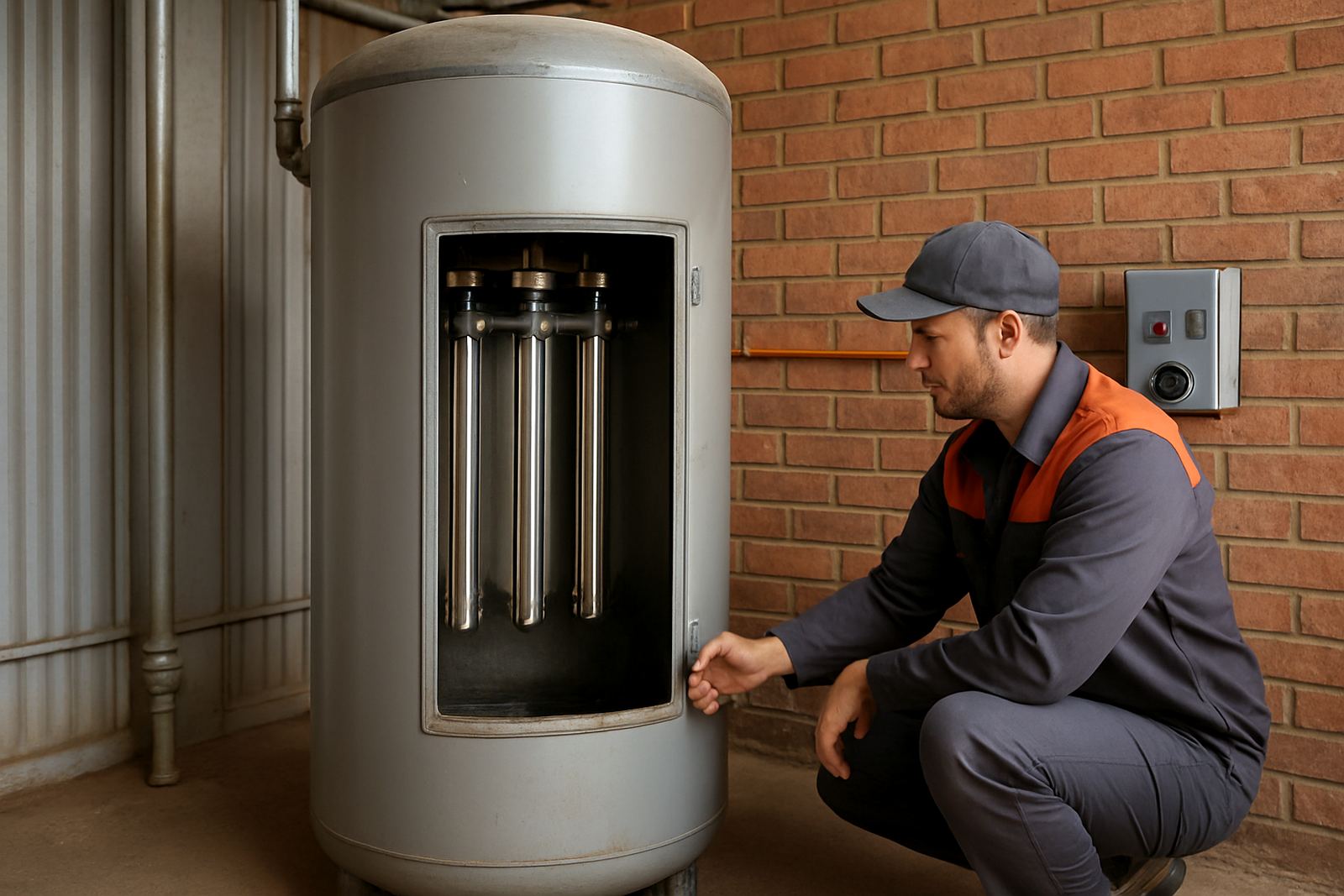
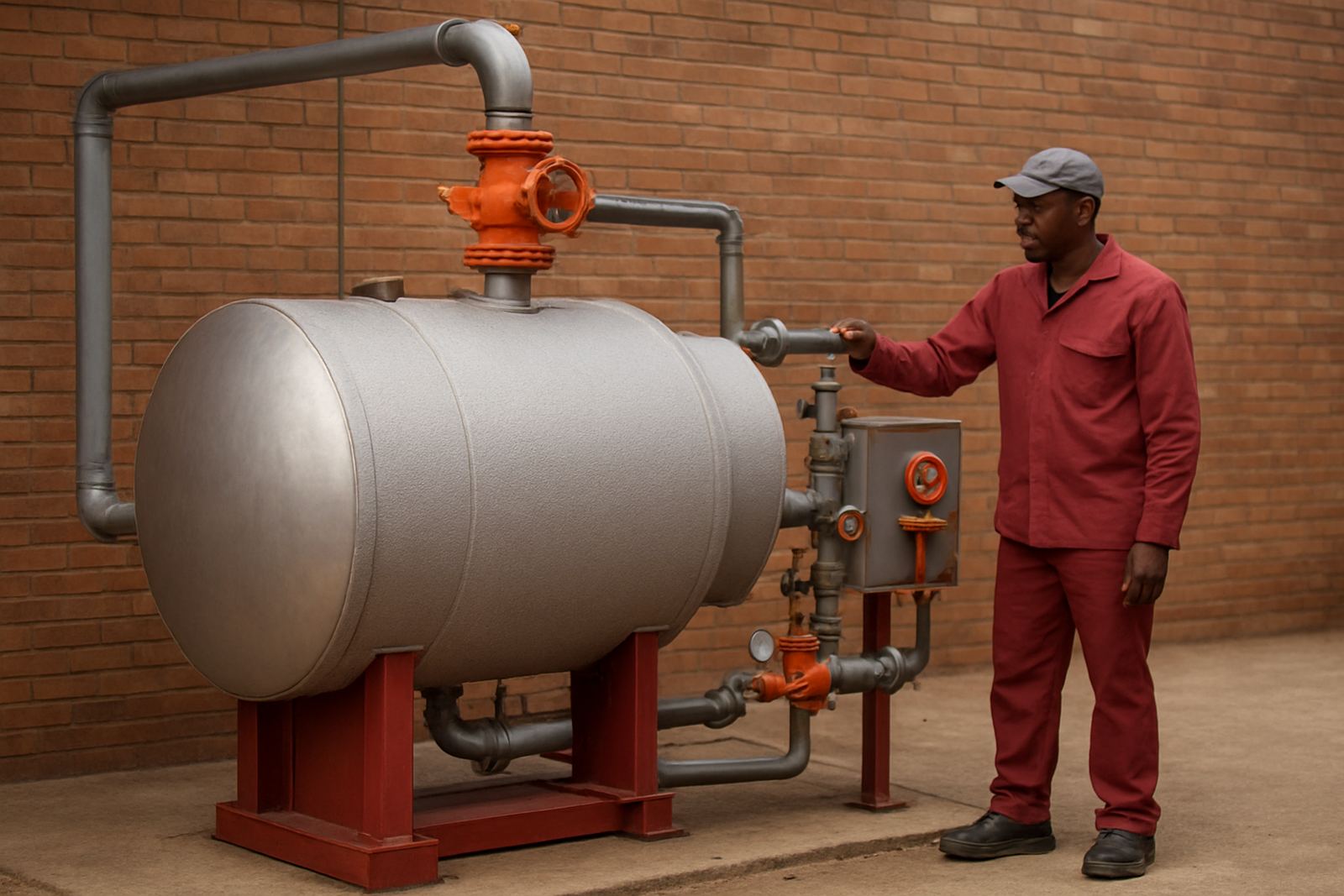
- Units can be supplied as vertical or horizontal vessels depending on available headroom and footprint.
- Tube bundles, internal coils and shell-and-tube arrangements are selected according to steam pressure and required heat transfer.
- Options may include temperature gauges, pressure relief valves, level controls, insulation, drain points and inspection manways.
For coastal or high-moisture sites, careful material choice matters. Corrosion resistance, proper lagging and good support steelwork help the unit last longer, especially where plantrooms get damp or air movement is poor. We also see plenty of damage caused by vibration and poor pipe support, so the installation details are just as important as the tank size.
Where steam calorifiers suit best
Steam calorifiers are ideal where there is already a reliable steam source and a consistent hot water need. They are often the cleaner choice when a site wants to avoid oversizing electric geysers or running multiple smaller heaters that struggle to recover after peak use. In practical terms, they work well where hot water is needed quickly and in bulk, not just in small amounts through the day.
Common applications include:
- Kitchen and laundry hot water
- Process washdown lines
- Sanitary hot water for staff facilities
- Pre-heating for production cleaning systems
- Hot water stores linked to boiler plant
They also help on sites where load-shedding affects other equipment. The calorifier itself does not run on mains electricity for heat, although controls and pumps may still need backup power if the system uses them. On older sites in particular, we check whether the hot water plant should be tied into the generator circuit so recovery is not lost during outages.
Installation details, steam supply and utilities
A steam calorifier needs a proper steam line, condensate return and safe discharge arrangement. Steam pressure, trap sizing and venting must be matched to the vessel so the unit heats evenly and does not hammer or flood. Water quality also matters because scale on the water side cuts heat transfer and can shorten service life. If the feed water is hard or carries solids, we normally recommend treatment support before the unit goes into full production.
Installation checks should include the following:
- Available steam pressure and stable supply during peak demand
- Condensate return route and trap condition
- Cold water inlet pressure and flow rate
- Space for maintenance access and future tube cleaning
- Safe drain point for blowdown and servicing
- Electrical supply for controls, pumps and alarms if fitted
Where plantrooms are tight, we plan for removal paths as well. A unit that cannot be lifted or slid out for inspection becomes expensive later. We also check the local municipal or site requirements for discharge and water handling, because some facilities need specific drainage control before commissioning can go ahead.
Care, servicing and signs the unit needs attention
Steam calorifiers need regular servicing if they are expected to recover quickly and keep water at temperature. Typical care includes checking safety valves, examining the tube bundle for scale, testing controls, confirming steam traps are working and making sure insulation and support brackets are intact. On busy sites, annual inspection is the minimum. High usage plants may need more frequent checks.
Watch for these signs of trouble:
- Longer hot water recovery times
- Steady temperature dropping during demand peaks
- Condensate not returning properly
- Water hammer in the steam line
- Leakage from flanges, manways or valves
- Rust stains, wet lagging or noisy operation
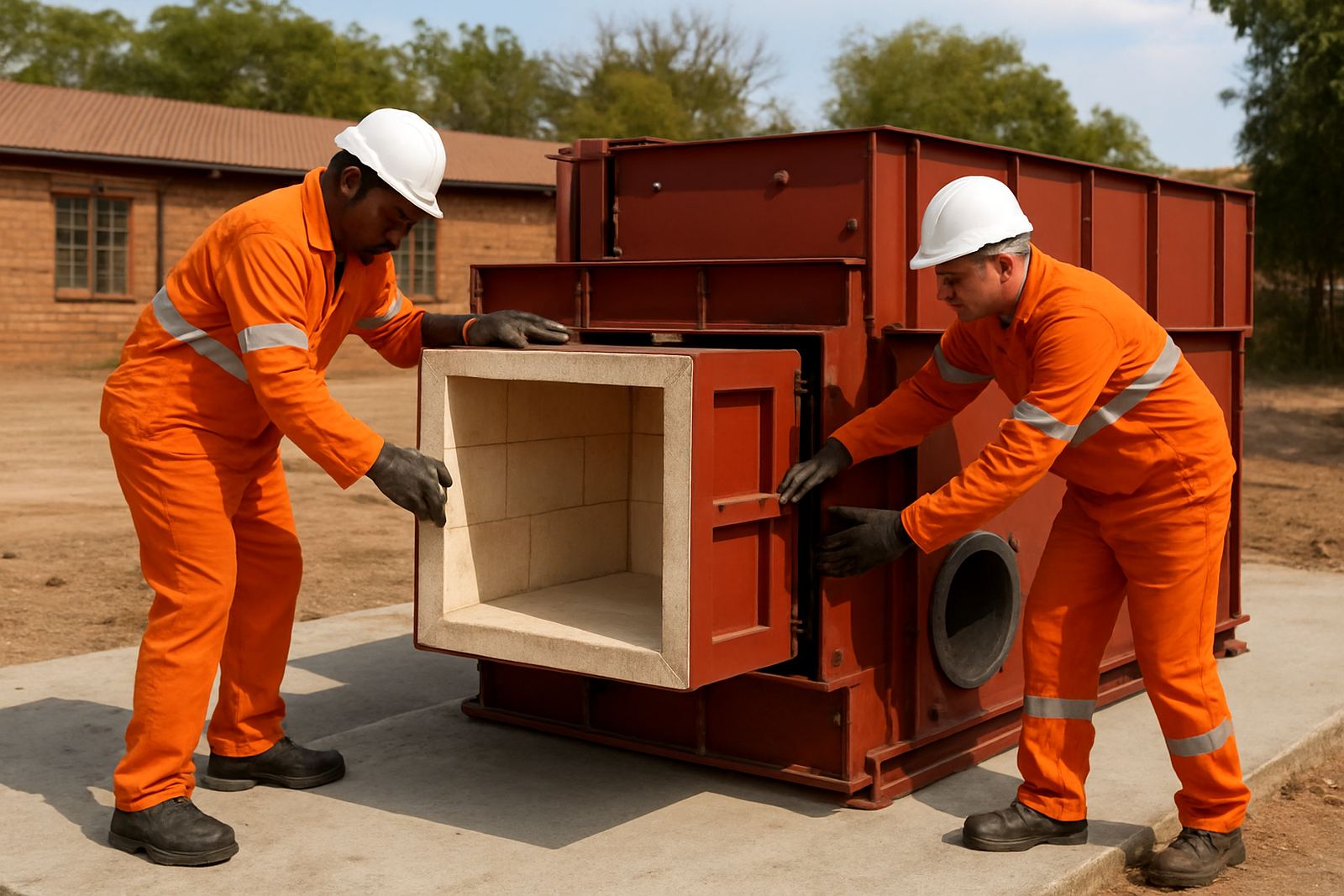
If the water side is scaling up, cleaning may restore performance before parts fail. If the steam side is trapping condensate or the controls are not cycling correctly, the whole system can become uneconomical to run. Ai-TEC handles boiler servicing, calorifier maintenance, combustion tuning, refractory relining and plant refurbishment, so the calorifier can be dealt with as part of the wider steam plant instead of as a stand-alone item.
What to check before you order
Before ordering a steam calorifier, it helps to have a clear picture of the site demand and the available utilities. That avoids undersizing, wasted steam and unexpected installation changes. A short site assessment usually gives enough information to size the vessel correctly and to decide whether a replacement can fit into the existing room without major civil work.
Please have the following details ready:
- Required litres per hour or peak hot water demand
- Steam pressure available at the plant
- Cold water inlet temperature
- Preferred storage volume and footprint
- Available floor loading and access for lifting
- Any corrosion, scale or previous leak history
- Whether the unit must run during load-shedding or generator changeover
If a site is expanding, we can also look at whether a larger vessel, a second calorifier, or a refurbishment of the existing plant will give better value. Ai-TEC is based in Jet Park, Boksburg and supports sites nationally through service teams and branch coverage in Boksburg, Kempton Park, Germiston, Pretoria, Midrand and Sandton.
Why sites choose Ai-TEC for steam hot water plant
Ai-TEC has worked with boilers, calorifiers, inline heaters and incinerators since 2009, with a practical focus on service life, fuel use and safe operation. For steam calorifiers that means we look at the whole hot water system, from the boiler house to the last valve on the line. That approach helps reduce repeat callouts and keeps the plant ready for day shift, night shift and weekend cleaning.
Our team includes operations, projects, service and fabrication support, so we can handle new supply, replacement work, maintenance and emergency callouts under one roof. If you need a steam calorifier for an existing boiler house or a replacement unit for an ageing hot water system, we can size it, fit it and keep it working.
Key facts
| Product type | Steam-heated calorifier |
|---|---|
| Typical use | Fast recovery hot water generation on steam sites |
| Capacity range | Approx. 300 litres to 10 000 litres, larger on request |
| Construction | Vertical or horizontal pressure vessel with internal coil or tube bundle |
| Utilities needed | Steam supply, cold water inlet, condensate return, drain and controls |
| Service area | Gauteng and nationwide industrial sites |