What a Feedwater Tank Does in a Boiler Plant
A feedwater tank stores treated hot water before it is drawn into the boiler by the feed pump. Keeping that water warm lowers thermal shock, helps the boiler recover faster and reduces wasted energy each time the burner cycles. In practical terms, the tank gives the plant a stable reserve so the boiler is not trying to pull cold, untreated water straight from the mains or a header tank.
On commercial sites the tank also supports deaeration and recovery of condensate where that is part of the system. That matters on plants with long operating hours, wash-down demand, or changing loads through the day. In winter, or during load-shedding when systems restart, a well-sized feedwater tank can make the difference between a smooth start and repeated nuisance trips.
- Stores hot make-up water for boiler feed
- Helps maintain steadier boiler inlet temperature
- Reduces stress on pumps, valves and pipework
- Supports condensate return where the system includes it
Tank Sizes, Materials and Build Options
Feedwater tanks are usually specified by boiler size, operating hours and the amount of condensate returned to the system. Smaller plants may only need a compact tank for a single boiler and a limited buffer, while larger industrial plants often require a bigger unit with enough volume to support peak demand and recovery from shutdowns. We size each tank around the actual plant load, not a guess.
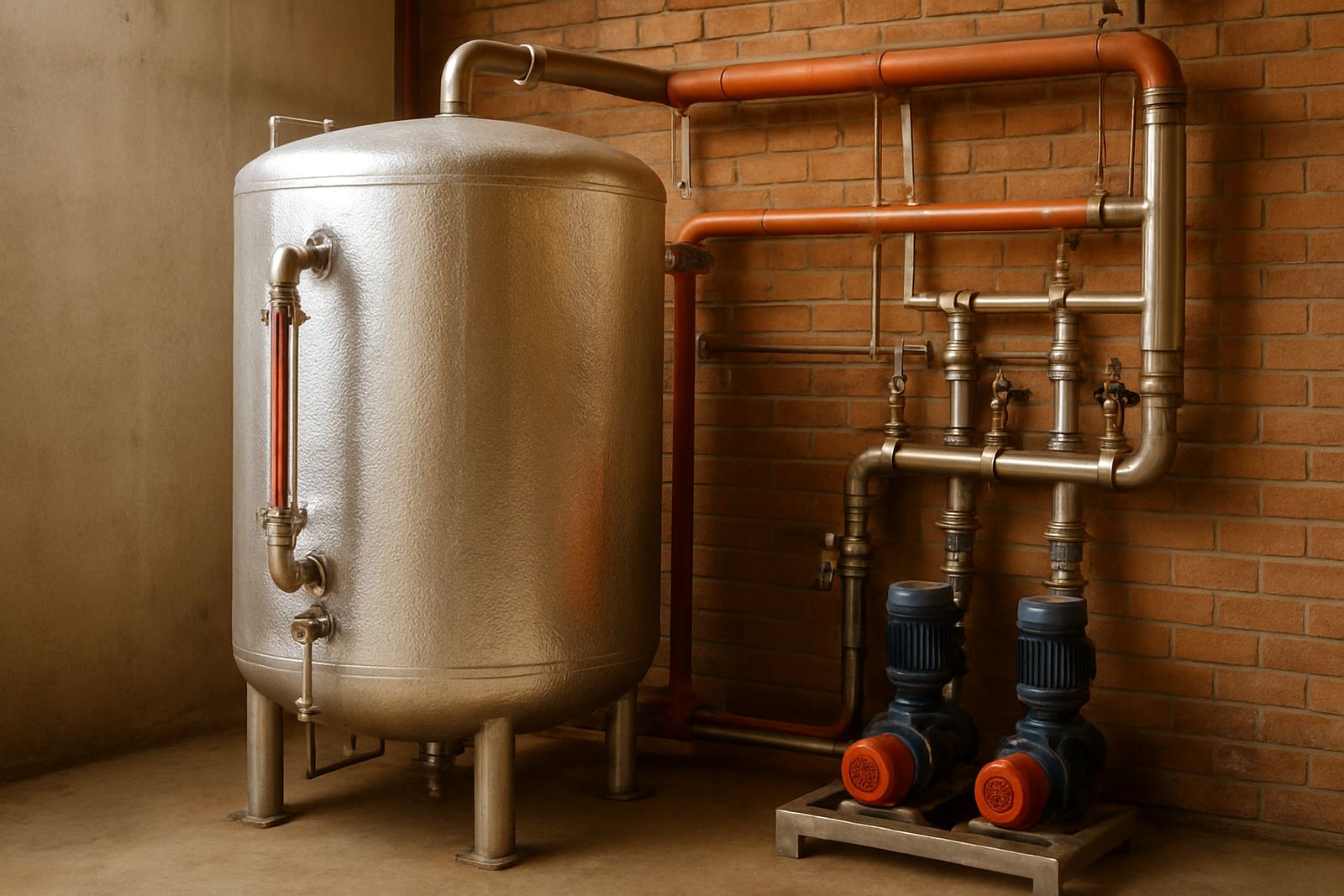
Typical options include mild steel construction with insulation, internal coatings where water quality demands it, and external cladding to protect the insulation. Tanks can be supplied as horizontal or vertical units depending on plant room height and floor space. Access points, level controls, drain points and inspection hatches should all be planned from the start so the tank remains serviceable after installation.
- Insulated tank bodies for heat retention
- Carbon steel construction for industrial duty
- Custom inlet, outlet and vent arrangements
- Level gauge, probe and float control options
- Insulation and cladding to suit indoor or exposed plant rooms
Where Feedwater Tanks Suit Best
These tanks are used wherever a boiler must run reliably under changing demand. They are common in factories, hospitals, laundries, food processing plants, residential estates, commercial kitchens, abattoirs and utility rooms where steam or hot water supply has to stay consistent. A feedwater tank also suits sites that run on long shifts, where repeated cold starts would otherwise waste fuel and shorten equipment life.
They are especially useful where a plant has condensate return, make-up water treatment, or a duty stand-by boiler arrangement. In those installations the tank becomes a central point for storing hot water, blending return streams and keeping feed pumps supplied without cavitation. That is important on older plants too, where pipe runs are long and the water system has been modified over time.
- Boiler rooms with more than one boiler
- Sites with condensate return lines
- Operations affected by load-shedding restart cycles
- Plants where hot water draw-off varies through the day
- New builds and plant refurbishment projects
Installation, Utilities and Site Requirements
Installation starts with correct placement, access for maintenance and proper connection to the boiler feed system. The tank needs a level base, safe lifting access and enough room around it for pipework, controls and inspection. On some sites it can be installed indoors next to the boiler plant; on others a separate service area works better, provided the pipe runs are properly insulated.
Feedwater tanks themselves do not need a heavy electrical load, but the associated pumps, level controls and instrumentation do. Depending on the plant, the tank may also tie into electric or steam heating, condensate return, chemical dosing or hot-water make-up. If the system uses gas-fired boilers, we check that the feed arrangement does not create delays or low-water faults during burner start-up.
- Level concrete plinth or steel support frame
- Feed pump connection and isolation valves
- Vent, overflow and drain routing
- Insulated pipework to reduce standby losses
- Power supply for controls, probes and pumps
Care, Cleaning and Ongoing Servicing
A feedwater tank should be inspected regularly for scale, corrosion, leakage and failed insulation. Even insulated tanks lose heat if the jacket is damaged or if the lagging gets wet. Internal sludge, oil carryover and oxygen pitting can also build up quietly, especially on plants that have not had consistent water treatment support. Left alone, those faults lead to poor pump performance and unstable boiler feed.
Routine care usually includes checking the level controls, cleaning strainers, testing alarms, confirming drain operation and inspecting all valves and joints. Where condensate return is in use, the tank should also be checked for contamination from process leaks. Our service teams handle annual inspections, plant refurbishment work and emergency callouts when a tank issue starts affecting boiler operation.
- Inspect insulation and external cladding for damage
- Flush sludge and debris from drain points
- Test probes, floats and level alarms
- Check pump suction conditions and valve function
- Review water treatment and condensate return quality
What to Check Before You Order
Before ordering a feedwater tank, gather the basic plant details so the tank is correctly sized and set up for your site. Start with boiler capacity, number of boilers, expected operating hours and whether you return condensate. Then confirm the available floor space, access route, ceiling height and whether the tank needs to fit through existing plant room doors. These points matter more than people often think.
You should also confirm water temperature targets, pump duty, inlet and outlet sizes, control type and whether the tank will be indoors or outdoors. If the site is in a corrosive or coastal environment, say so early. The same goes for load-shedding backup arrangements, because restart behaviour can affect how the tank and controls should be specified.
- Boiler type, output and operating pressure
- Required storage volume and desired hot water temperature
- Condensate return percentage, if applicable
- Available space, access route and support method
- Power supply and control preferences
- Site location, climate and corrosion exposure
Key facts
| Product type | Insulated feedwater tank for boiler feed systems |
|---|---|
| Typical capacities | 500 L to 20,000 L plus, sized to plant demand |
| Construction | Carbon steel tank with insulated cladding |
| Temperature use | Designed to hold hot treated feedwater |
| Mounting options | Horizontal or vertical, floor mounted |
| Common fittings | Inlet, outlet, vent, drain, level controls and inspection access |