What a Blowdown Vessel Does in a Boiler Room
A blowdown vessel sits in the boiler blowdown line and gives hot water, sludge and flash steam a safe place to slow down before they go to drain. Boiler blowdown can leave the boiler at very high temperature and pressure, so direct discharge into pipework or a drain is not good practice. The vessel helps cool the liquid, reduce pressure and protect the surrounding plant room from scalding and pipe damage.
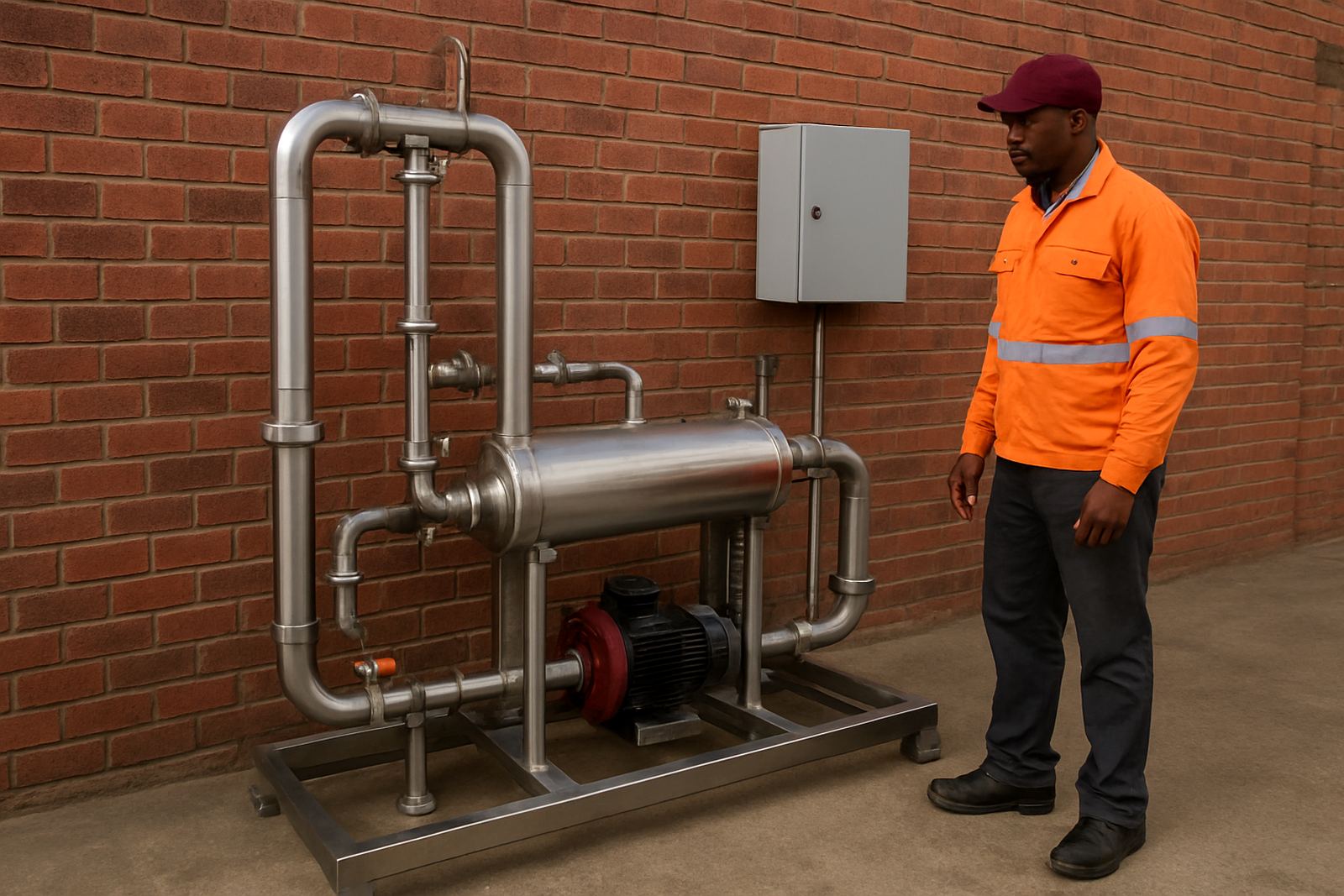
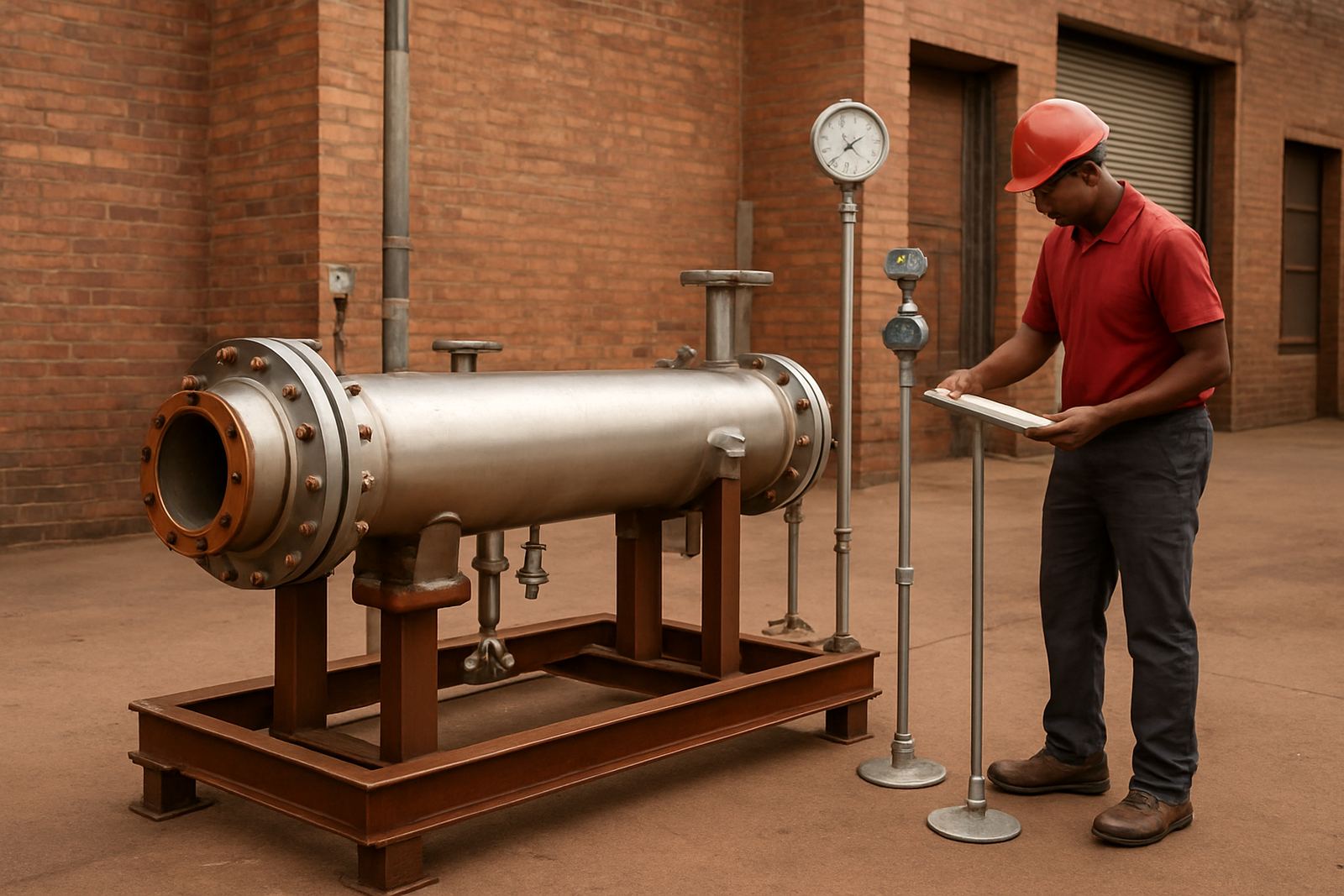
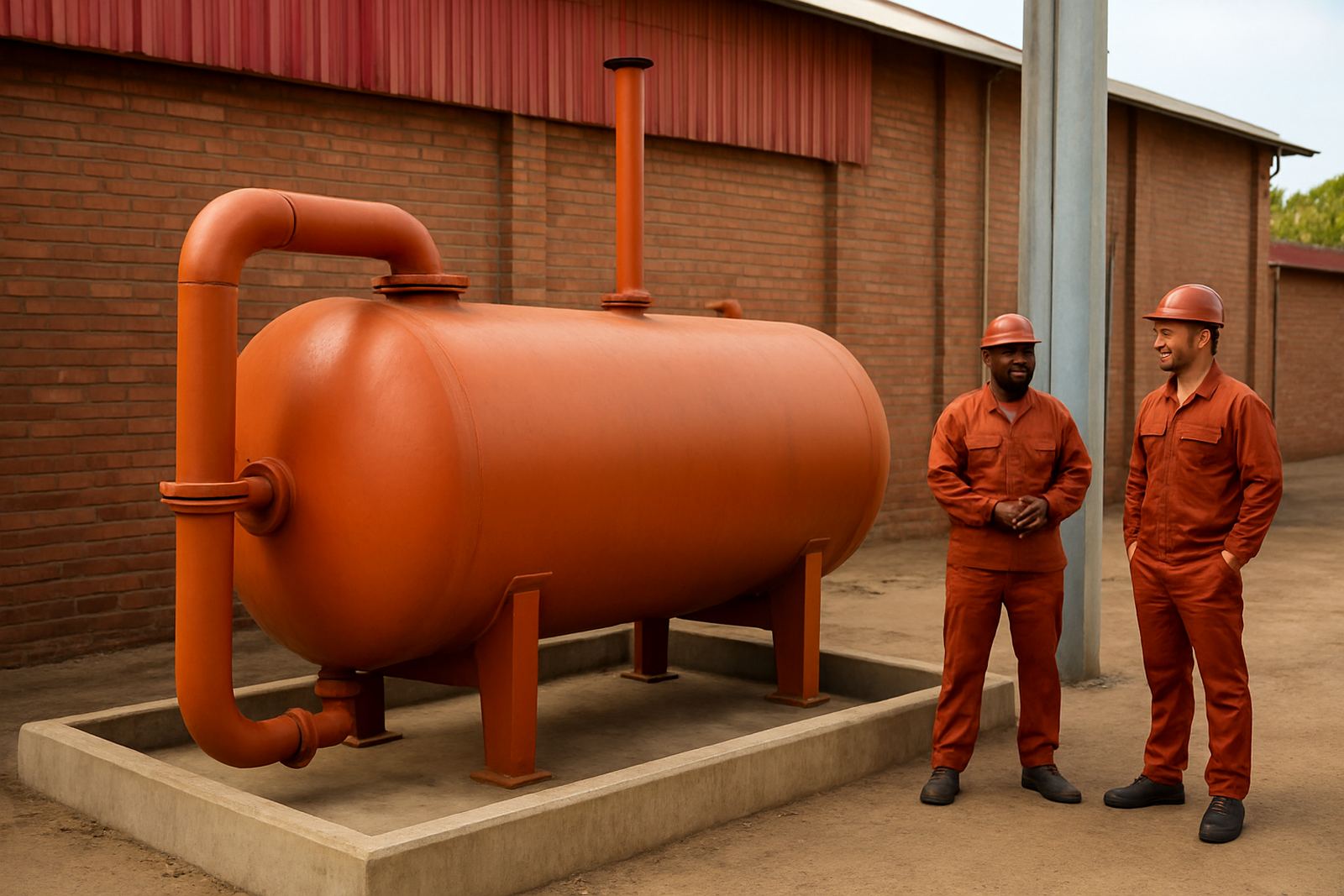
In practical terms, it is a pressure-rated steel vessel with inlet, vent and discharge connections sized for the boiler it serves. On larger plants, the vessel may work with a cooling arrangement or drain header so the final discharge meets municipal and site requirements. For sites with load-shedding, constant cycling or hard water, a properly sized blowdown vessel also helps the plant run with less stress on valves and fittings.
Common Sizes, Connections and Build Options
We supply blowdown vessels for small pack boilers, medium steam plants and heavier industrial duty systems. The correct size depends on boiler capacity, blowdown volume, pressure, pipe routing and where the vessel will discharge. Most vessels are fabricated in carbon steel with suitable wall thickness for the duty, then fitted with nozzles, inspection openings and support brackets as needed.
- Small plant vessels for single boilers and compact boiler rooms
- Medium duty vessels for multi-boiler rooms and frequent blowdown cycles
- Larger units for industrial sites, laundries, food plants and process steam
- Horizontal or vertical layout depending on the space available
- Custom inlet, vent and drain positions to suit the existing pipework
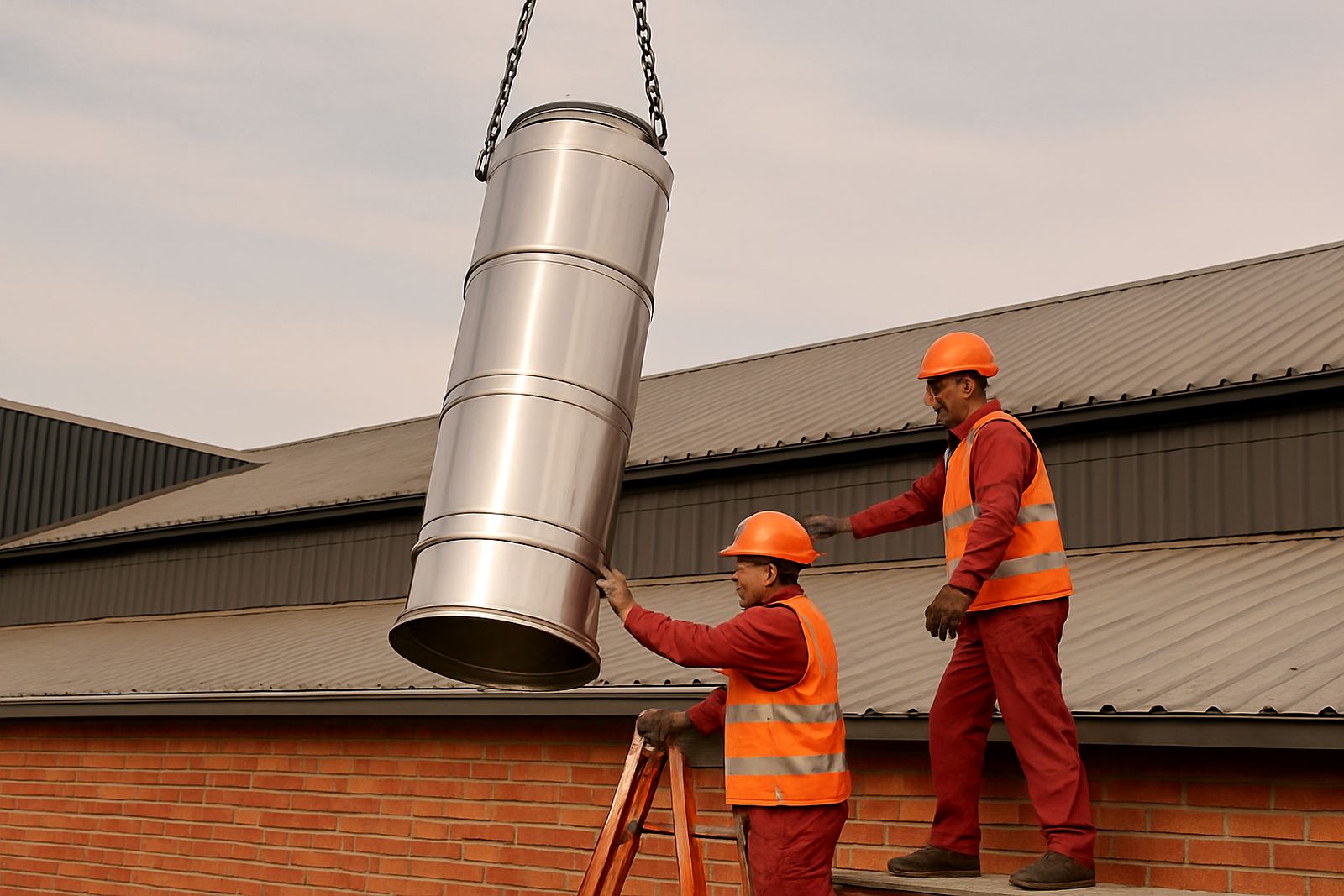
Where space is tight, we can set the vessel up to fit around existing skids, walls and pipe bridges. If the boiler room is near the coast or in a humid area, we can specify protective coatings and supports that cope better with corrosion. A good finish matters, because a vessel is often fitted in a warm, wet and fairly unforgiving corner of the plant.
Where Blowdown Vessels Suit Best
Blowdown vessels suit any site that needs controlled boiler discharge. That includes hospitals, factories, schools, mines, laundries, commercial buildings, abattoirs and manufacturing plants. They are especially useful where the boiler house is close to staff walkways, where drains run through occupied areas, or where there is no margin for splashing hot water onto the floor.
They also make sense where there are regular manual blowdowns, automatic TDS control systems or intermittent boiler operation. If the site has multiple boilers, the vessel can be selected to manage the combined discharge load. We often see issues at plants that were added to over time, with old pipework, mixed materials and not enough thought given to cooling before discharge. That is where a proper vessel and the right routing save a lot of trouble later.
- Steam boiler rooms with manual or automatic blowdown
- Sites where discharge must be cooled before entering a drain
- Plant rooms with limited access or sensitive floor finishes
- Operations needing safer maintenance conditions for staff
Installation Requirements and Utility Connections
Blowdown vessels normally do not need electrical power or gas supply of their own. They work as a pressure and cooling vessel in the discharge line, so the important points are correct pipe sizing, safe venting, support and drainage. The boiler blowdown line should be routed with suitable fall where possible, with strong supports and enough room for expansion when the line heats up.
On installation, we check the inlet from the boiler, the vent arrangement, the drain discharge point and the route to final drain or cooling tank. The vessel must sit on proper supports and be aligned so condensate and sludge do not pool in the wrong place. On sites in Gauteng, we often plan around tight plant rooms, municipal drain limits and live production schedules, because shutting down a steam line for too long is never ideal.
- No direct power requirement in standard duty setups
- No burner or gas train on the vessel itself
- Correct vent line is important for flash steam release
- Drain discharge must suit site and municipal rules
Care, Inspection and Routine Servicing
Blowdown vessels need regular checking, especially where boilers produce heavy sludge or where water treatment is not as good as it should be. Sediment can build up at the base, fittings can loosen from repeated heat cycles, and external corrosion can creep in if the plant is damp. A simple service routine prevents small faults from turning into hot-water leaks or blocked drains.
Our service teams handle vessel inspections, drain checks, vent condition, support integrity and signs of overheating or pitting. We also look at the boiler side of the system, because if the blowdown is carrying too much scale or mud, the vessel will show it. In many cases, the vessel problem is actually a water treatment problem upstream, so we look at the full picture rather than just the tank itself.
- Inspect for leaks, rusting and damaged nozzles
- Check discharge temperature and flow path
- Remove sludge and scale from the base where needed
- Confirm supports, brackets and access remain safe
What to Check Before You Order
To quote and supply the right blowdown vessel, we need the boiler size, operating pressure, blowdown method and the route to the drain. We also need to know whether it is a single boiler or a shared line from more than one boiler, because that changes the vessel sizing and connection arrangement. If the plant is being refurbished, photos of the existing pipework help a lot.
Please also tell us if the site has any restrictions on floor loading, height, access doors or discharge temperature. If the boiler room is in a coastal area, or the system sees harsh service and long run hours, we may suggest heavier coating or fabrication details that hold up better over time. When you order, it helps to have these details ready and it saves back-and-forth later, which is useful when a plant is under pressure and time is tight.
- Boiler type, pressure and maximum blowdown volume
- Single boiler or multiple boiler connection
- Available space, access width and ceiling height
- Drain location, pipe route and discharge limits
- Material preference, coating and support requirements
Ai-TEC Support for Supply and Aftercare
Ai-TEC supplies blowdown vessels, arranges installation support and backs the equipment with maintenance and plant care services. From our Jet Park base in Boksburg, we support customers in Boksburg, Kempton Park, Germiston, Pretoria, Midrand and Sandton, with national service available for larger sites. Our team can also assist with boiler servicing, combustion tuning, water treatment support, annual inspections and plant refurbishment.
If your existing vessel is corroded, undersized or difficult to maintain, we can assess it and recommend a replacement or upgrade path. We work with commercial and industrial boiler rooms where safety, uptime and practical access matter. For new builds and refurbishments alike, the aim is the same: keep the discharge controlled, keep the plant room safer and keep the boiler system working properly, without unnecessary fuss.
Key facts
| Product | Blowdown vessel for boiler discharge cooling and flash steam release |
|---|---|
| Typical use | Commercial and industrial steam boiler plants |
| Construction | Fabricated steel vessel with inlet, vent and drain connections |
| Configuration | Horizontal or vertical, depending on space and duty |
| Utilities | No direct power or gas requirement on standard units |
| Service areas | Gauteng and national site support from Jet Park, Boksburg |