Where steam earns its keep
Steam is the better fit where a site needs fast heat transfer, high process temperatures, or heat at more than one point across a plant. It is common in food production, laundries, sterilising, process heating and some industrial drying work. Because steam carries a lot of energy in a small volume, it can move heat quickly through long pipe runs and into equipment that must recover temperature fast between batches.
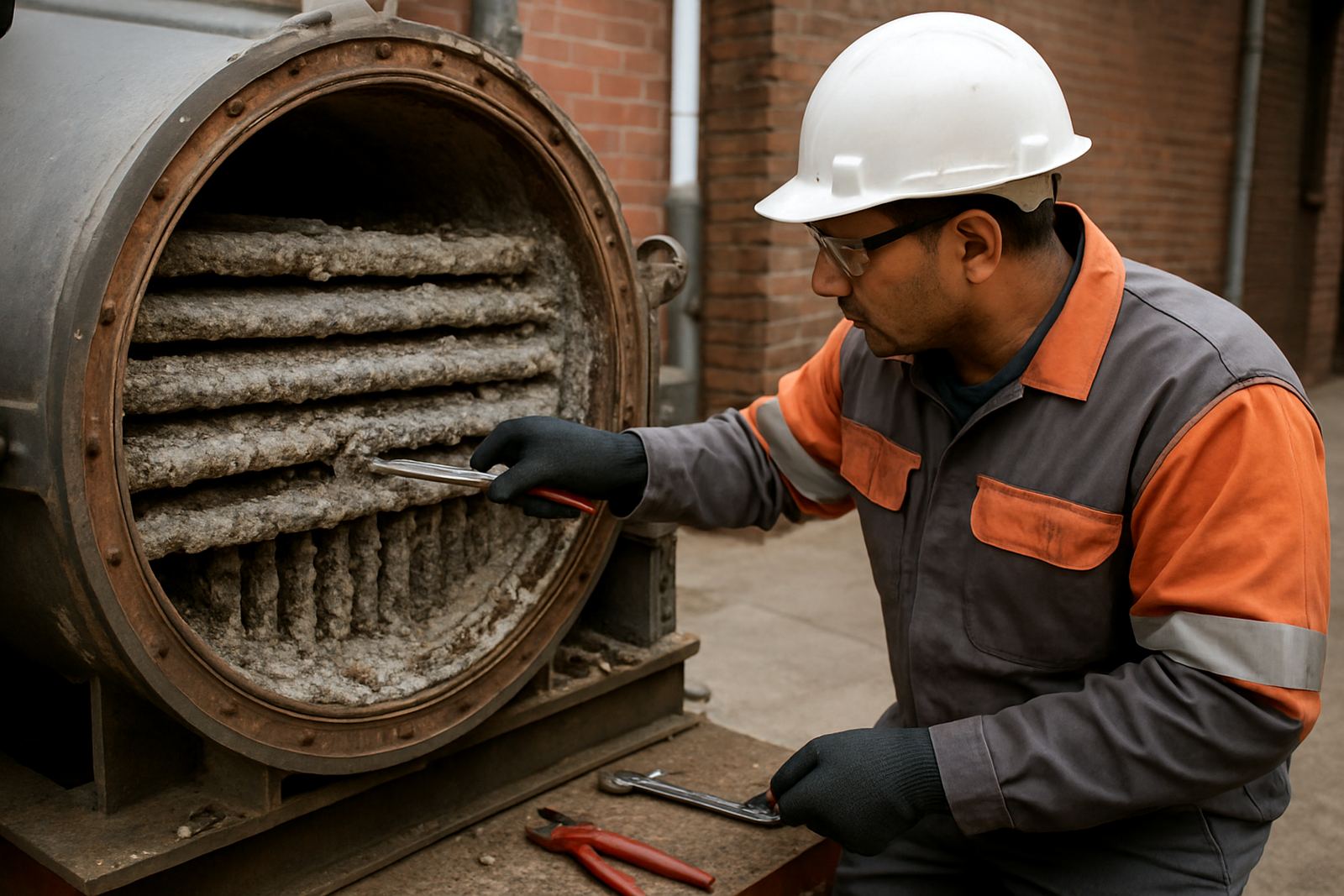
The trade-off is that steam systems ask for more from the plant team. You are dealing with pressure vessels, safety valves, traps, blowdown, condensate return and water treatment. If a site in Germiston or Boksburg runs on hard water and the treatment slips, scale builds quickly on tubes and heat transfer drops off. That means more fuel, less output and more breakdowns.
- Best where process heat must come on quickly.
- Useful for multiple users on one distribution network.
- Needs regular inspections, combustion tuning and water treatment support.
- Usually carries higher maintenance demands than a hot water loop.
Where hot water makes more sense
Hot water systems suit heating duties that need steady temperatures rather than high-pressure energy. They are often used for space heating, washdown, domestic hot water, pre-heating and lower temperature process duties. On sites with offices, warehouses and some light processing, hot water can be simpler to operate and easier to control.
For many commercial buildings, hot water also makes plant layout easier. There is no need for the same pressure management as a steam plant, and controls can be set to match occupancy hours. That matters when power is interrupted by load-shedding or when a site in Midrand or Sandton must restart quickly after an outage. A properly sized hot water system can come back into service with less fuss, provided pumps, valves and controls are maintained.
It is not a cure-all though. If a process needs very high temperatures, rapid response or heat at multiple points over a wide plant, hot water can become bulky and less efficient. The water volume is larger, pipe runs may need better insulation, and long distances can mean more heat loss.
The real comparison on a working plant
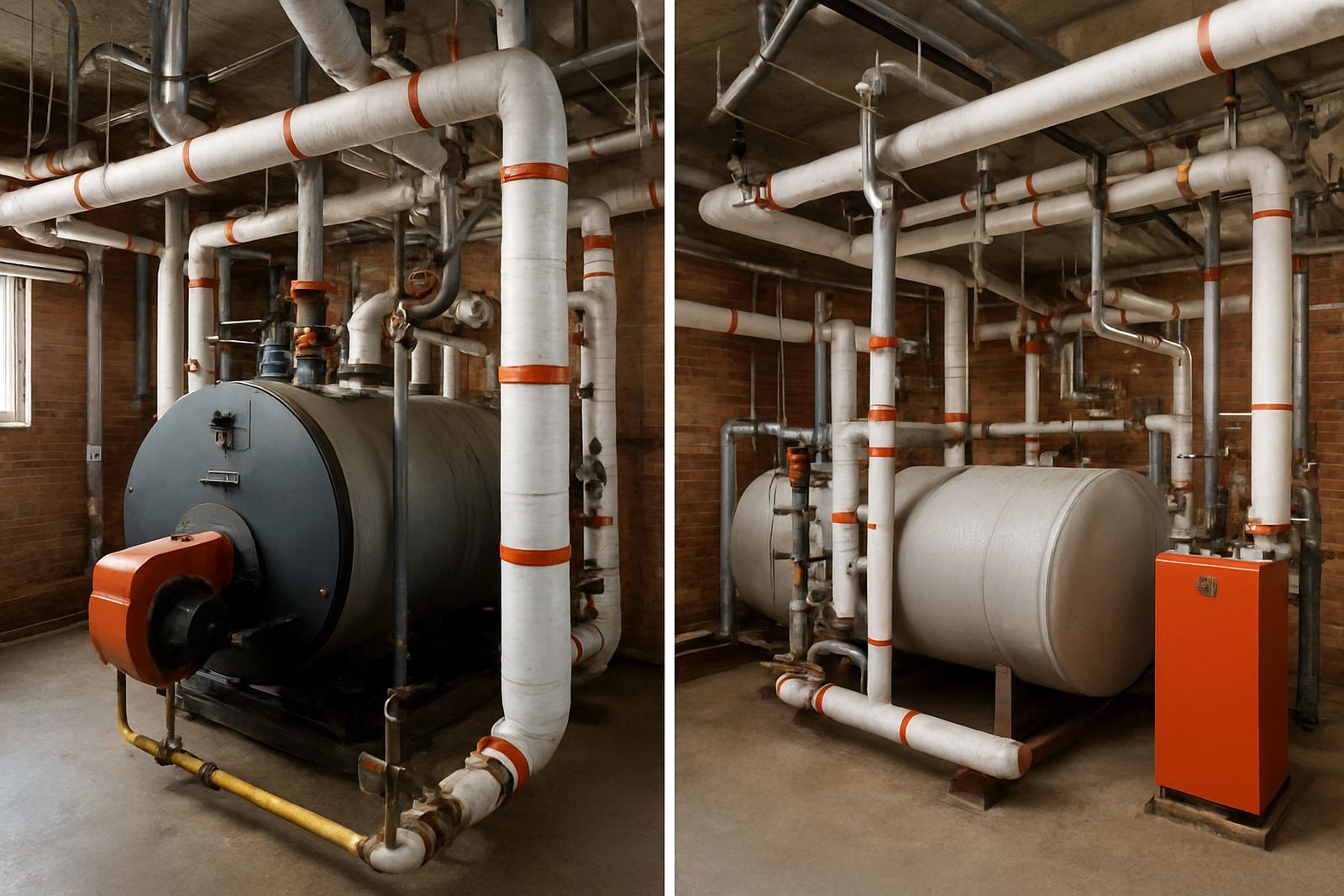
On paper, the choice looks simple. In practice, the decision comes down to site use, water quality, maintenance skill and energy cost. A plant that runs 18 hours a day with changing loads may value steam because it reacts quickly. A warehouse or office block with limited heating needs may be better served by hot water because it is easier to manage and less pressure intensive.
When we assess a system, we look at the full duty cycle, not just the boiler size. We check pipe lengths, return temperatures, turnover, make-up water, fuel type and whether the plant needs future expansion. We also look at practical matters like access for service teams, position of valves, and whether there is enough room for safe maintenance around the boiler house.
- Steam suits batch processes, sterilising and fast heat transfer.
- Hot water suits steady heating and lower temperature duties.
- Water quality affects both, but steam systems usually feel the impact sooner.
- Frequent starts and stops can push either system hard if controls are not set correctly.
What South African conditions change
Local conditions matter more than many buyers expect. In Gauteng, scale formation is often the first issue on older plants because make-up water can be hard and treatment is neglected when production gets busy. On the coast, humidity and corrosion can shorten the life of panels, burners and control gear if maintenance is left too long. In both cases, a boiler room that looked fine at installation can deteriorate quickly once weather, load-shedding and water quality start working against it.
Municipal rules and insurer requirements also come into play. Pressure equipment must be kept in safe working order, records should be current, and annual inspections cannot be treated as paperwork only. If your site has a failed relief valve, leaking condensate line or poor combustion readings, that becomes a real safety and downtime issue. A cold start after load-shedding can also reveal weak points in old pipework and lagging, especially where the plant was patched over several years.
For sites in Jet Park, Boksburg and the wider East Rand, we often see plants that were expanded one section at a time. The boiler may still be sound, but the distribution side is no longer balanced. That is where proper commissioning, tuning and refurbishment make a measurable difference.
Running costs are not only about fuel
Many buyers compare steam and hot water by boiler efficiency alone, but the real cost includes maintenance labour, water treatment, losses from poor insulation and downtime when a system fails. A steam plant can be very efficient when traps work, condensate returns are healthy and combustion is tuned correctly. It can also become expensive quickly when live steam escapes through faulty traps or when a dirty heat exchange surface wastes fuel.
Hot water plants often look cheaper to run because the controls are simpler and there are fewer pressure related components. But if pumps are undersized, if thermostats are poorly placed, or if the return temperature is too high, the boiler will cycle badly and fuel use will climb. The plant then ends up costing more than expected, especially during winter mornings when demand rises sharply.
For some businesses the right answer is not choosing one system over the other, but matching each area to the correct duty. A process line may need steam while the office block and wash areas are better served by hot water. That mixed approach can cut waste and reduce strain on the main boiler plant.
A practical example from the East Rand
A manufacturing site in Boksburg was using an ageing steam plant for both process heating and general building hot water. The steam side still had a job to do, but the same system was being asked to carry duties it was never really sized for. Staff kept getting complaints about slow recovery after starts, and the maintenance team was spending too much time on nuisance faults.
After checking the load profile, the site kept steam for the process line and shifted the building heating to a separate hot water loop. The result was less cycling on the steam plant, cleaner control over the hot water demand and easier fault finding during service visits. The change also made it simpler to plan maintenance around production shifts, which matters when a site cannot afford surprise downtime.
How Ai-TEC helps sites choose and maintain the right system
Ai-TEC works with steam and hot water plant across Gauteng and nationwide, from routine boiler servicing to plant refurbishment, combustion tuning and emergency callouts. Our team looks at the full duty, not only the equipment tag. That includes heat output, water treatment, operating hours and the condition of the existing pipework and controls.
We also support calorifiers, inline heaters and incinerators, so the wider thermal system gets attention as one working plant. On many sites the issue is not the boiler alone. It is the condition of the burners, refractories, valves, return lines and treatment regime. Once those are sorted properly, the difference in fuel use and reliability is easy to see.
If your plant is due for annual inspection, keeps tripping after load-shedding or is no longer matching production demand, the safest next step is a proper site review. That way you can decide whether steam, hot water or a mix of both gives the best fit for your operation.