What a steam separator actually does in plant steam
A steam separator removes entrained moisture and droplets from the steam line before the steam reaches heaters, calorifiers, process equipment or control valves. It does not make steam itself, it simply improves the quality of what is already being made in the boiler house. That matters because steam that looks dry at the boiler outlet can pick up water in long pipe runs, after pressure drops, or where the line is badly insulated.
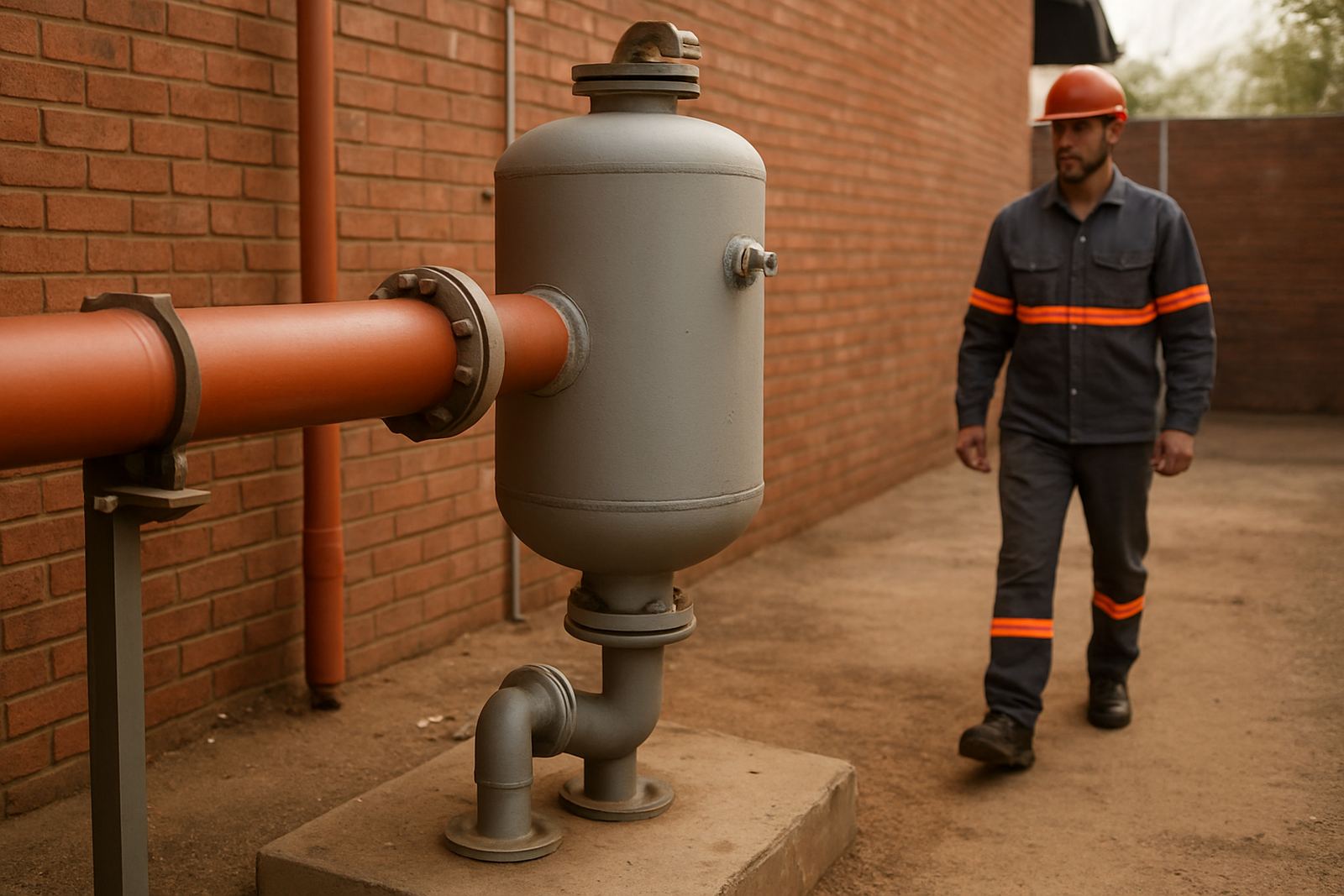
In practical terms, the separator gives the steam a chance to change direction and slow down. Heavier water droplets fall out while the drier steam continues on. On sites around Boksburg, Kempton Park and Midrand, we see this often on plants that run hard in the morning, then cycle down later in the day. Those changing loads can carry water through the main if the pipework and drainage are not set up correctly.
When fitting one makes sense
A separator is not needed on every steam line, but there are clear signs that it should be considered. If your downstream equipment is struggling to reach temperature, if control valves chatter, or if water is collecting in strainers and low points, wet steam may be the cause. The same applies where a plant has long distribution lines, several pressure drops, or older insulation that has seen better days.
- Heat exchangers taking longer than normal to come up to temperature
- Surging or knocking in valves, traps or pipe bends
- Visible condensate carryover after start-up
- Uneven heating between different parts of the plant
- Water hammer when loads change suddenly
We also recommend looking at separator use during plant refurbishments, especially where the boiler has been upgraded but the steam main has not. A new boiler will not fix a bad distribution line. If the pipe size, take-offs and drainage are not right, the steam quality still drops before it reaches the point of use.
How better steam quality improves the job downstream
Dryer steam transfers heat more evenly and more quickly. That means calorifiers recover faster, process vessels heat more predictably, and inline heaters do not have to work around liquid water entering the system. It also helps reduce corrosion and wear, because water in the line can carry scale, rust and debris into sensitive components.
On sites with frequent load-shedding, the restart after power returns is often rough. Boiler cycling, rapid demand changes and cold pipework can all increase moisture carryover. A separator will not solve every restart issue, but it does help steady the steam before it reaches the load, which can reduce mechanical shock and unwanted downtime.
- More consistent outlet temperatures
- Less strain on traps, valves and seals
- Lower risk of water hammer in old pipe runs
- Better fuel use because heat is used where it should be
What to check before fitting a separator
Before any separator is added, the steam line should be checked as a whole. If there is no proper drip leg, poor insulation, undersized pipework or blocked traps, the separator will only deal with part of the problem. Good steam practice starts with the boiler, the main line, the take-off point and the condensate return. Miss one of those and the results can still be patchy.
We look at pressure, load profile, line length and the condition of existing fittings. The separator must be installed in the right orientation and matched to the steam rate, otherwise it can become a restriction. In some cases, a small pipe modification or an extra drain point makes a bigger difference than the separator itself, so it pays to inspect properly first.
In humid coastal conditions, especially where equipment sits near open plantrooms or washdown areas, external corrosion can also shorten component life. That is why the full steam line, not just the separator, needs to be considered during maintenance planning.
A Gauteng example from a busy production site
At a manufacturing site in Germiston, the team was dealing with repeated water hammer on a main feeding a process heater and a calorifier. The boiler was in decent condition, but the steam quality changed every time the load came on hard after shift change. The pipe run was long, had a few flat spots, and the downstream valves were getting hammered by wet steam.
After inspection, a separator was fitted close to the point of use, with the drainage arrangement corrected and the traps checked. The result was not dramatic in the showy sense, but it was practical: less vibration, steadier heat, and far fewer complaints from production. That is usually the real test. If the plant runs quieter and the heating stays even, the separator has done its job.
- Shorter warm-up time on start-up
- Less nuisance maintenance on valves and traps
- Improved temperature stability during production
- Lower risk of emergency callouts after shift changes
Fitting, servicing and keeping the system honest
A steam separator should be part of a planned maintenance approach, not a last-minute fix. If it is fitted correctly but the condensate drain is blocked, the benefit drops away fast. Regular inspections should include the separator body, drain line, trap operation, insulation condition and any signs of corrosion or leakage around joints.
For industrial sites across Gauteng, and for national plants that need support from one service team, the aim is always the same: keep steam dry where it matters and keep the plant safe enough to run day after day. If your boiler house is coping but the process side is still giving trouble, the separator location and the drainage arrangement are worth a hard look.
It is one of those items that only gets noticed when it is missing. Once fitted correctly, the plant usually feels steadier and the maintenance crew gets fewer surprises.